
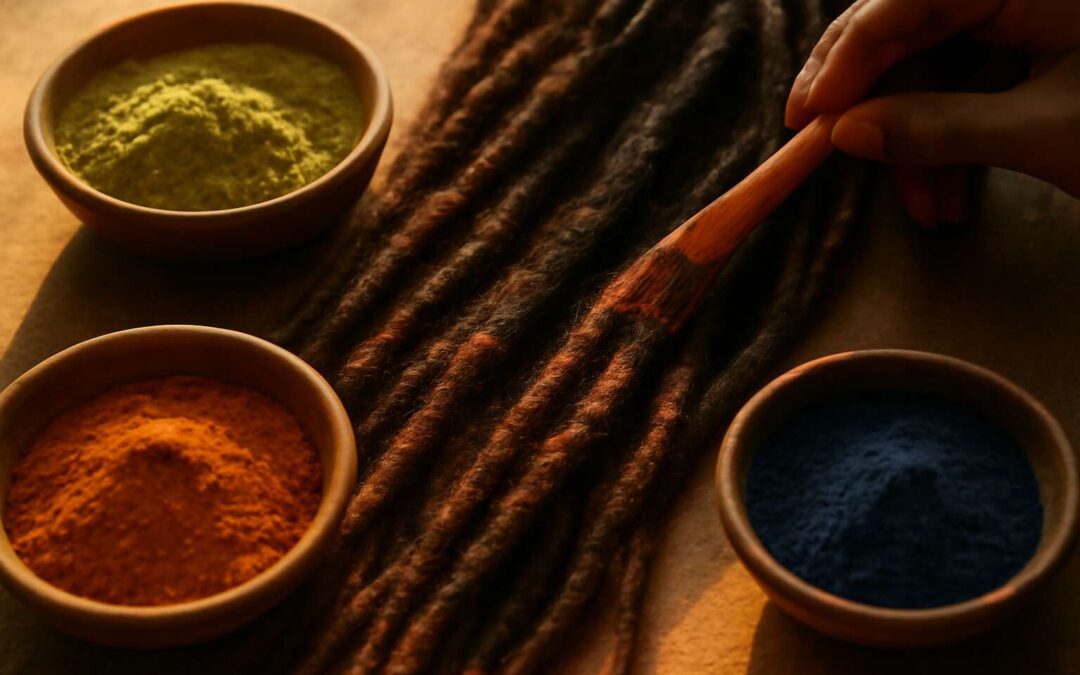
Natural dye options for dreadlocks
Plant-based dyes overview
Colour is a declaration, and in South Africa, dreadlock wearers are increasingly choosing gentler paths. Plant-based options promote scalp comfort and long-lasting vibrancy. natural hair dye for dreadlocks offers warmth and depth without harsh fumes that cling long after the chair is emptied!
- Henna and indigo for rich browns and reds
- Cassia obovata for golden tones
- Beet juice or hibiscus for pinkish hues
- Walnut hulls for chocolate browns
Each strand carries a memory of sun and soil, and outcomes vary with base colour and porosity. These plant-based options invite curiosity, restraint, and respect for hair as living thread.
Herbal and mineral alternatives
Across South Africa, dreadlock wearers choose gentler color paths, where scalp comfort meets lasting vibrancy. For natural hair dye for dreadlocks, herbal and mineral blends offer warmth and depth without the fumes that cling long after the chair is emptied. Each variation can whisper sunlit browns, coppery glints, and earthy undertones that feel as rooted as a baobab.
Consider these herbal and mineral avenues for natural hair dye for dreadlocks:
- Coffee or black tea infusions for deep browns and a touch of warmth
- Sage or rosemary rinses for cool, sunlit highlights
- Rhassoul or bentonite clay with mineral pigments for subtle earth tones
These options honor hair as living thread; outcomes ripple with base colour and porosity. The drama is quiet, the scent is soft, and the journey remains respectful of heritage and texture. For natural hair dye for dreadlocks, the horizon is a patient spectrum of shade and shine.
Commercial natural dye brands to consider
Color can be a quiet triumph. South Africa’s beauty scene shows a growing appetite for natural hair dye for dreadlocks that delivers depth without compromise on scalp comfort. These commercial options redefine color that honours texture and porosity, pairing plant-powered pigments with thoughtful formulations.
Consider these brands as you explore options that fit both heritage and modern aesthetics:
- Tints of Nature
- Logona
- Herbatint
Each shade sings differently on varying porosities, inviting a patient, respectful approach to color that honours personal history and texture.
Shade range and pigment results
A rising tide is reshaping South Africa’s hair scene: nearly 40% of color-conscious clients are choosing plant-powered options over synthetic dyes. In the lore of dreadlocks, color is a patient spell that reveals texture and history, not just shade. Natural hair dye for dreadlocks invites depth while keeping scalp comfort intact.
Shade range becomes a dialogue with porosity, offering tones that glow on different strands.
- Chestnut glow
- Mahogany ruby
- Copper kiss
- Ash brown for cool undertones
- Espresso depth
Pigment results ride the caravan of base color and porosity. On lighter bases, sun-kissed hints emerge; on darker bases, multidimensional depth unfolds. With natural dyes, patience yields the most seamless transitions and enduring richness that honor texture and history.
How to choose plant-based dye for dreadlocks
Understanding ingredients to avoid
Bright whispers surround plant-based options, yet the field remains a labyrinth. In South Africa, interest in natural hair dye for dreadlocks has surged, and purity matters as much as shade. Seek formulas built on transparent labels—henna, indigo, cassia, and other plant-derived pigments—processed to preserve color while honouring scalp health.
Understanding ingredients to avoid helps navigate shelf promises with confidence.
- PPD or para-phenylenediamine
- ammonia or ammonium compounds
- resorcinol
- heavy metals
- synthetic fragrances or preservatives
Labels that detail botanical sources and honest processing foster trust; the right choice respects dreadlocks and scalp alike, offering depth without compromising hair integrity.
Assessing scalp sensitivity and patch testing
Color should treat the scalp like a garden, not a chemistry lab—that’s the vibe when choosing natural hair dye for dreadlocks, especially here in South Africa where purity and provenance matter.
Assessing scalp sensitivity is key; patch testing is recommended to gauge potential reactions before any full application. If irritation surfaces, pause and reassess the product. Favor formulas with botanical notes and clean processing, not synthetic stand-ins.
- Patch testing recommended to gauge sensitivity
- Botanical sources and gentle processing
- Personal scalp history and allergies
When labels are transparent and ingredients are sourced with care, your dreadlocks stay vibrant without compromising scalp health.
Color results by natural pigment types
“Beauty should be safer and kinder to your scalp,” a belief many South Africans share. When you choose a natural hair dye for dreadlocks, color results hinge on natural pigment types and your hair’s porosity.
Seek formulas with pure botanical notes and minimal processing. Read ingredients and avoid synthetic stand-ins; look for brands that source plant materials responsibly and label provenance clearly.
Color outcomes follow pigment families more than brand names.
- Henna yields coppery to brick-red tones on light to medium levels
- Indigo builds blue-black depths on darker hair
- Cassia offers warm, neutral golds and lighter refreshes
For dreadlocks here in SA, local climate and caring routines affect longevity—maintenance matters as much as the dye itself.
Application methods and processing times
A vibrant note of copper or midnight—your hair tells a story. In South Africa, climate and routine shape how colour settles. When choosing natural hair dye for dreadlocks, seek plant-based formulations with clear provenance and pure botanicals; pigment families guide outcomes more than brand names.
- Strand-by-strand for precise control
- All-over paste for uniform colour
Application methods vary: you can coat the locs by hand, or work a paste along the strand and cap the head for even saturation.
Processing times range from 30 to 180 minutes, depending on porosity and desired depth of shade. Always follow brand directions and tailor timing to the texture and thickness of your dreadlocks.
In SA, climate and maintenance matter as much as the dye itself—heat, sun, and wash frequency influence longevity. A careful care routine helps the colour linger beautifully between sessions.
Application techniques for plant-based dyes on dreadlocks
Pre-dye preparation and sectioning
Cape Town salons report a 40% uptick in plant-based dye requests this year—color with conscience is no longer fringe. For natural hair dye for dreadlocks, preparation is the quiet heart of a clean, lasting result. In South Africa, clients demand scalp safety alongside vibrant outcomes.
Pre-dye preparation and sectioning set the stage. Detangle gently, moisturize sparingly, and guard the scalp surface. Section dreadlocks into four to six panels with clips; keep roots accessible and color boundaries clean. The following checklist helps maintain even saturation:
- Moisten hair lightly to prevent pigment dilution.
- Section dreadlocks into four to six panels.
- Clip sections; keep roots accessible.
- Protect the scalp with a barrier.
Application techniques begin at the roots and move toward the ends; saturate each strand with calm, even strokes. After coverage, slip on a plastic cap and time the processing window. Rinse until the water runs clear, then condition.
Mixing ratios and consistency
Application techniques begin at the roots and unfold with patient intention, a quiet spell of color riding the ridges of each dreadlock—here in South Africa, the craft respects scalp and shade alike. For natural hair dye for dreadlocks, the paste must feel like silk, sit with even gravity, and never dribble beyond boundaries.
Mixing ratios and consistency shape the final glow. Powder-to-liquid balance governs body and absorption; aim for a soft, paintable paste that clings without dripping. The following anchors guide nuance (adapt to brand and texture):
- 2 parts dye powder to 1 part liquid for a dense, creamy paste
- 1 part dye powder to 1 part liquid for a medium, manageable consistency
- 3 parts dye powder to 1 part liquid for deeper, saturated color
As you work, let the hue settle with calm, even strokes, and honor the scalp’s embrace of plant-based artistry.
Applying dye evenly through locs
In South Africa, 74% of dreadlock wearers seeking gentler color turn to plant-powered options. For natural hair dye for dreadlocks, application becomes a quiet ritual—roots first, then a patient sweep across each strand, a spell of color that respects scalp and shade alike.
Let the paste sit like velvet, riding the ridges without dripping; gravity does the work as color climbs each lock. In this land of sun and sea, patient hands coax pigment into the cortex, yielding tone that feels alight yet grounded. Respect for scalp remains the compass, ensuring glaze and glow unite in harmony.
Rinsing, drying, and conditioning tips
In South Africa, 74% of dreadlock wearers seeking gentler color turn to plant-powered options. For natural hair dye for dreadlocks, application becomes a quiet ritual—roots first, then a patient sweep across each strand, a spell of color that respects scalp and shade alike.
Rinsing is a soft surrender, the paste loosening like velvet as pigment climbs without rushing the cortex. The world slows; sun and sea blend into the lull of water and wind, and the color settles into each ridge with quiet confidence. Drying follows a similar hush—air-dried in shade, a gentle breeze coaxing lock by lock toward a glossy, satin finish.
Conditioning becomes a mindful caress, restoring moisture without overpowering the tone. A light veil keeps the glaze from dulling and helps the pigment to breathe, leaving locks that feel grounded and alive—ready for the next sunlit chapter of this natural voyage.
Common mistakes to avoid
Across South Africa, 74% of dreadlock wearers seeking gentler color reach for plant-powered options. natural hair dye for dreadlocks becomes a meditative ritual—roots first, then a slow, sweeping glide that coats every coil with respectful patience. The weave of shade emerges as a quiet companion to sunlit days, a ceremony where pigment travels along each ridge, not rushed, but sure.
Common mistakes to avoid keep this rite singing.
- Overloading at the roots—this clumps dye and can stain unevenly.
- Ignoring even distribution, leaving some locks starved of pigment.
- Rushing processing time, which traps pale patches and dulls the final tone.
- Using metal tools or containers, which can react with plant-based pigments.
Respect the quiet chemistry, and the final hue reveals itself in deliberate, mindful pauses.
Maintenance and longevity of natural dye on dreadlocks
Color longevity expectations
Color that behaves like a well-mannered guest—natural hair dye for dreadlocks tends to linger longer than you’d expect, typically holding firm for about 4 to 6 weeks with steady care.
Longevity hinges on pigment depth, scalp oils, and exposure to sun and frequent washing. In ideal conditions, shade depth remains discernible beyond the initial flush, fading graciously rather than washing out unevenly.
- Shield locks from harsh sun to reduce quick fading
- Choose pH-balanced, residue-free products to avoid buildup
- Space retouching to maintain even tone and texture
Even a modest routine—patience and a dash of South African sun can become an ally rather than an adversary, helping your hue stay juicy and distinctive.
Wash routines and products to use and avoid
Some believe color fades like a sunset; in reality, natural hair dye for dreadlocks can hold its glow for four to six weeks when you honour your scalp’s rhythm and the sun’s warmth. A patient approach keeps tones even and the sheen alive, especially for textured lock journeys here in South Africa!
Maintenance leans on gentle routines and mindful product choices that respect the locks’ porosity.
- Use pH-balanced, residue-free shampoos and low-foaming cleansers to prevent buildup
- Choose sulfate-free formulas and light conditioners that won’t weigh hair down
- Keep moisturizers with natural oils to support dye longevity
- Avoid chlorine, harsh detergents, and very hot water that quicken fading
With a relaxed wash cadence, shade depth remains discernible longer; a little sun in moderation can become an ally rather than an adversary for longevity.
Sun exposure and color fading
South Africa’s sun is a sharp editor for color. About 60% of fade happens in the first month under bright UV, so maintenance relies on rhythm and restraint. natural hair dye for dreadlocks sits best when it moves with the scalp’s tempo and the climate’s warmth.
Sun exposure and fading unfold with textured hair. A touch of sun can lift tones, but long exposure hastens dulling and shifts. Moisture and lightweight oils help preserve sheen and pigment without weighing the locs.
- Sun exposure influences color uniformity across locs.
- Moisture balance supports glow and longevity.
- Porosity variations determine where pigment lingers hardest.
Touch-ups and refreshers without damage
In South Africa, about 60% of fade happens in the first month under bright UV. Maintenance relies on rhythm and restraint. For natural hair dye for dreadlocks, staying in step with the scalp’s tempo and the climate’s warmth keeps pigment steady and glow intact.
- Even pigment across varying porosity
- Scalp-friendly refreshes that minimize stress
Touch-ups and refreshers should be gentle, preserving strand integrity and avoiding over-processing. A light, even lift across the locs helps pigment stay even as the sun shifts tones.
Longevity comes from balanced moisture and careful rinses, not heavy products. Porosity hotspots decide where pigment lingers and where it fades, guiding future maintenance. The right routine supports color without harsh cycles.
Storage and shelf-life of natural dyes
Here in South Africa, up to 60% of pigment can fade in the first month under bright UV. Maintenance for natural hair dye for dreadlocks isn’t a sprint—it’s a quiet ritual that keeps pigment honest through heat, routine washing, and daily wear. Longevity comes from balanced moisture and gentle rinses, not heavy products or harsh cycles. In our climate, the scalp and locs reward pigment that moves in step with moisture levels. A steady rhythm preserves sheen and even tone across the locs.
Storage and shelf-life go hand in hand with patience. Keep dyes in a cool, dark place away from heat. Unopened jars can last 6–12 months; once opened, follow the label for refrigeration guidance and use promptly.