
Historical and Cultural Roots of Dreadlocks in India
Ancient Ascetics and the Sadhu Tradition
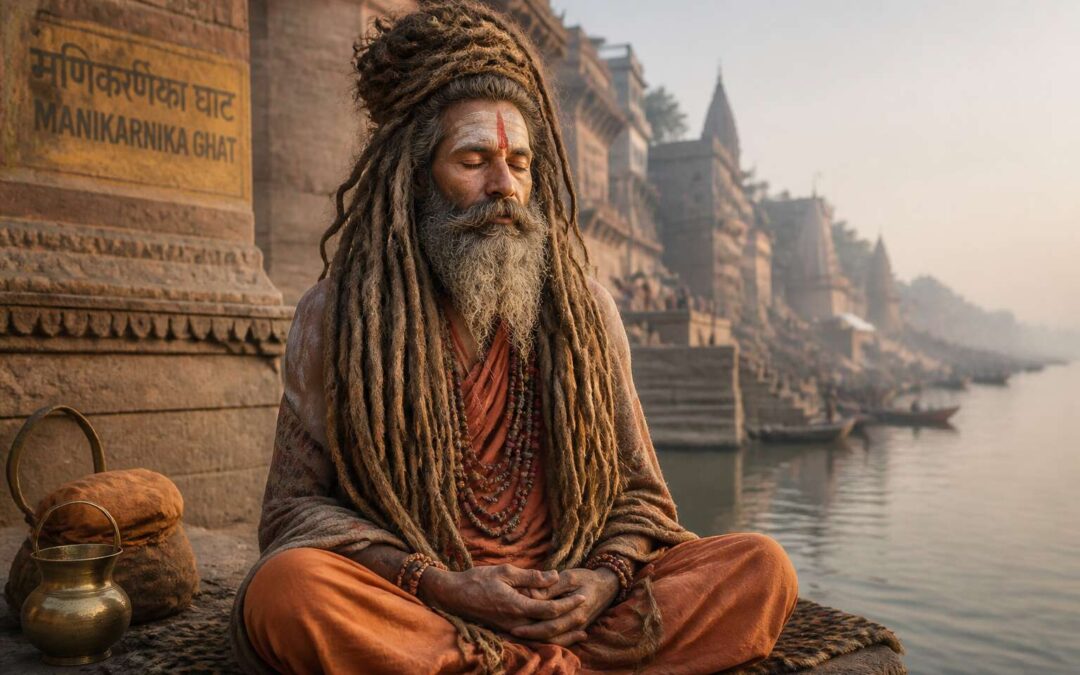
Among the heat-soaked plains of Varanasi, a sadhu’s jata, or matted locks, signals a life deliberately detached from society’s expectations. This is where dreadlocks india finds its most potent origin story, rooted in the ancient ascetic tradition rather than in trend cycles. The god Shiva is depicted with wild, knotted hair, and his devotees emulate that divine dishevelment as an act of devotion.
For a sadhu, the jata records time spent in meditation. It is never brushed, never cut, and often twisted with ash or rudraksha beads. The matting process is organic, a physical manifestation of spiritual neglect of the self.
The symbolism is layered:
- It represents the abandonment of vanity.
- It signifies a rejection of caste and social hierarchy.
- It marks a state of being outside the cycle of domestic life.
To the casual observer, these locks appear unkempt, but to the initiated, they represent a vow of renunciation.
Religious Symbolism in Hinduism and Shaivism
Sanskrit liturgical records offer a startling detail: the Vedic fire god Agni is described with jata, twisted locks, meaning dreadlocks india carries textual roots that pre-date the classical renunciate movements. The Atharva Veda even codifies rites for matted hair, tying the practice to solar worship and the accumulation of inner heat.
Shaiva cosmology expands this symbolism. Shiva’s jata intercepts the descending Ganga, each strand functioning as a dam for divine energy. Practitioners interpret the coils as a helical map of consciousness, where the hair becomes a storage vessel for tapas, the heat generated through austerity.
- Coiled locks mirror the supposed pathway of kundalini energy.
- The unkempt crown signals a mind unburdened by external order.
- Pashupata doctrine treats matted hair as a deliberate repudiation of ritual purification.
This theological density separates religious dreadlocks india from merely stylistic locking, embedding the hairstyle within a framework of cosmic management.
References in Ancient Texts and Temple Art
Four thousand years ago, a bronze figurine from Mohenjo-daro depicted a figure with matted locks, an archaeological whisper that confirms the subcontinent recorded dreadlocks india long before written epics. The Rig Veda references warriors with “kapardin,” or braided hair, while the Mahabharata describes characters with jata as a mark of wisdom and discipline. These textual roots anchor the practice in a historical reality that predates later monastic orders.
Temple art amplifies this evidence. Carvings at Elephanta and Ellora depict mythological beings with spiraled tresses, while Chola bronzes show divine figures with elaborate locked crowns.
– Ajanta frescoes reveal courtly attendants with coiled hair during festive scenes.
– The Ramayana’s Valmiki is represented with matted locks in Rajput miniatures.
– Kushan-era sculptures show bodhisattvas with stylized hair knots.
Sculpted narratives from the 5th century capture a cultural fingerprint; dreadlocks india functioned as a visual language across social roles, from warriors to poets, signaling an ancient, documented lineage rather than a borrowed or modern trend.
Regional Variations and Styling Traditions
Himalayan and Mountain Community Styles
Atop the Pir Panjal range, shepherds and shamans grow dense coils, a practice that predates temple asceticism. In these communities, matted hair often signifies resilience against subzero temperatures, as layered locks provide natural insulation. In certain Kumaoni villages, elders have woolen threads woven into their hair.
Local flora shapes styling traditions! Some mountaineers stiffen strands with pine resin and crushed juniper, while others rinse hair in fermented barley water. Common techniques include:
- Separating locks with a carved yak bone comb
- Coiling ends with handspun cotton cord
- Anointing with mustard oil and turmeric
These methods vary between villages. In Ladakh, mothers plait children’s hair into a single rope to protect them from mountain spirits. This regional approach to dreadlocks india remains tactile and rooted in survival, not religious doctrine.
Coastal and Southern Indian Practices
The salt air shifts the logic of hair. Along the Coromandel coast, fishermen grow dreadlocks india as a shield against marine exposure. Salt water tightens the coils naturally; sun and wind create a texture that other regions cannot replicate. Coconut oil seals each strand against the drying sea breeze.
In Kerala’s backwaters, the practices shift. Toddy tappers, who climb palms for their livelihood, keep their locks tightly braided to avoid snagging on fronds. Maintenance follows a regional logic:
- Rinsing with diluted lime juice to strip excess salt
- Massaging warm castor oil into the scalp at dawn
- Wrapping wet locks in banana leaf overnight
Tamil Nadu’s martial artists bind their hair into a single mass at the nape during initiation periods. The tropical humidity demands lighter treatment than the mountain styles of dreadlocks india, so neem-infused washes replace heavy oils. This coastal approach centers on managing dampness and heat rather than insulation.
Urban Contemporary Dreadlock Trends
Urban India has adopted dreadlocks india with a commercial enthusiasm that would confuse a sadhu. The city dweller treats locs as fashion, not penance. Bangalorean tech workers and Mumbai creatives maintain their hair with imported waxes and sea salt sprays, products designed for Caribbean humidity, not Indian summers.
The regional boundaries blur online. A Delhi influencer wears Himalayan-inspired freeform locs, while a Chennai stylist uses coconut oil and neem washes from the coastal tradition.
- Wax and resin for sculpted, uniform locs
- Freeform for the low-maintenance aesthetic
- Crochet or interlocking for instant length
This marketplace version of dreadlocks india still follows the old rules in some ways, but the narrative has shifted. The urban wearer buys the look, not the lifestyle.
Tribal and Indigenous Interpretations
In remote districts, dreadlocks india means something else entirely. Tribal communities across central India and the Northeast wear matted hair as clan record, not spiritual badge. The Konyak Naga of Nagaland grew long locs that tracked every ritual act. The Baiga of Madhya Pradesh treat hair as a boundary between the village and the forest.
Styling follows practical rules. Local materials replace shop-bought waxes:
- Clay and charcoal pastes harden the hair against rain.
- Fresh leaves wrap the length in humid months.
- Ember-tipped locs mark ceremony and mourning.
These techniques pass through generations. For tribal wearers, dreadlocks india is inheritance, not ornament. The hair holds memory of the soil, the seasons, the dead. No influencer sells that!
Maintenance and Care for Dreadlocks in Indian Climate
Managing Humidity and Monsoon Challenges
Monsoon humidity saturates the air. Your dreadlocks india must endure constant moisture, which swells each rope and creates frizz and hidden dampness. Managing this requires a disciplined routine.
- Use a diluted apple cider vinegar rinse weekly to reset pH.
- Dry the roots with a cool hairdryer after rain exposure.
- Apply a light oil, like jojoba, only to the scalp.
I recommend palm rolling twice daily to keep the cylinders firm. A microfiber towel absorbs excess water without roughening the cuticle. Cotton towels leave lint and disturb the loc structure. During the monsoon, never cover wet locks with plastic. Let them breathe and dry naturally.
Natural Oils and Herbal Treatments for Scalp Health
India’s Ayurvedic tradition has treated scalp ailments for millennia. This old knowledge matters for dreadlocks india. The climate pushes the scalp hard! Heat increases sebum. Monsoon moisture brings fungal pressure.
In my experience, natural oils are essential. Coconut oil penetrates the hair shaft deeply. Neem oil fights microbes without stripping the scalp. Jojoba mimics natural sebum, balancing oil production.
Herbal treatments target the scalp directly. Amla strengthens the roots. Bhringraj stimulates follicles. Brahmi calms inflammation.
- Warmed oil is applied to the scalp.
- The scalp is massaged, not the locs.
- An hour of rest follows.
- A residue-free cleanser removes the oil.
This sequence keeps the scalp clean and the locs unburdened. For loc wearers in India, consistent herbal care prevents itchiness and odour.
Effective Washing and Drying Techniques
For dreadlocks india, washing demands more deliberation than it receives. Water in many regions carries mineral deposits that bind to locs, creating stiffness. A chelating rinse with apple cider vinegar diluted in filtered water addresses this accumulation.
Frequency is the first decision. Weekly washing suits most urban dwellers. Monsoon months may require a fortnightly cycle since moisture lingers. This rhythm keeps dreadlocks india healthy without stripping natural oils.
Here is a sequence that respects scalp and loc integrity:
1. Pre soak the locs in warm water for five minutes.
2. Dilute a residue free shampoo before application.
3. Work the suds through each loc using fingertips, never nails.
4. Rinse until water runs clear.
5. Squeeze excess water with a microfiber towel.
Drying in humid air invites mildew. I prefer daytime washing so the sun assists evaporation. Air drying remains the gentlest option, though a diffuser on low heat works for thicker locs. Never go to sleep with damp locs! That habit prevents most odour problems.
Common Mistakes to Avoid in Tropical Weather
Maintenance for dreadlocks india often fails when you treat them like a fresh piece of rubber. The leading mistake is overhandling. People palm roll their locs twice every morning, hoping to flatten the frizz. That friction stretches the internal fibres and leaves the base thin and weak.
The second consequence is the wax trap. A dollop of heavy resin may look polished, but the tropical atmosphere converts that layer into a grimy shell. It shelters the lint, the sweat, and eventually the rot.
Local habits that cause injury:
- Peeling the root with a steel comb after every rain
- Tying the locs in a single tight cord for a full week
- Spinning the loose ends around your fingers as a distraction
Each of those actions rips the interior layer that holds the strands. For dreadlocks india, the true backstop is very little attention. The less you interject, the more the mat can consolidate itself. Leave the roots in the humidity and they will take their own shape.
Modern Perception and Social Acceptance
Dreadlocks in Bollywood and Indian Media
Bollywood has flipped the script on dreadlocks india. Once reserved for screen sadhus, they now appear on romantic leads and action heroes. This visual reinvention drives social acceptance. Urban audiences see dreadlocks india as edgy, even aspirational.
Music videos and streaming series reinforce the trend. I have watched this evolution unfold in real time. A film star with tied-back locs draws more applause than surprise. Media coverage normalizes what was once exotic. The camera does not linger on judgment anymore. It lingers on style. What a shift!
Workplace Norms and Professional Settings
Workplace acceptance of dreadlocks india has shifted in metro offices. Corporate policies are catching up with street style. I have seen colleagues wear locs to client meetings without friction. The old rules about professional hair are fading. South African professionals face a similar arc. What matters now is grooming and presentation, not the style itself.
Companies that embrace inclusive dress codes unlock broader talent pools. A well-maintained locs style signals discipline. Managers judge output, not hair texture.
Here is what modern HR policies often address:
– Clear grooming standards
– Anti-discrimination language
– Cultural sensitivity training
These changes reflect a global norm. Dreadlocks india remains a symbol of freedom and identity. The workplace adapts, slowly but surely.
The Impact of Global Culture and Fashion
Global street style is rewriting the rules of hair in surprising ways. I watched a Chennai-based stylist blend traditional Indian hair care with African loc maintenance, and the result was pure crossover energy.
Dreadlocks india now appears on fashion runways, music videos, and city cafés, driven by an appetite for authentic expression. Social acceptance follows the same arc as global culture. Young Indians wear locs because they admire the texture, the history, and the visual punch. No one asks for permission anymore! This is a quiet, confident shift.
Spiritual vs. Fashionable Identity
In Cape Town’s inner city, a young professional with dreadlocks india inspired coils might get asked one question: “Are you spiritual or just stylish?” The question itself reveals how far we have come. A decade ago, the query was “Can you get a job?”
Modern perception sits on a fulcrum. The spiritual roots of jata remain visible in yoga studios and ashrams, but the fashionable identity has colonised runways. The same person might wear locs for a meditation retreat on Monday and a brand launch on Friday. This duality is not a contradiction. It is a spectrum.
- Spiritual identity draws on centuries of Shaivite tradition and personal discipline.
- Fashionable identity draws on global street style and visual expression.
Social acceptance in South Africa follows a similar pattern. Young people see dreadlocks india as a canvas, not a costume. The judgement has shifted from “why” to “how.” That is the quiet victory.
How to Start and Grow Dreadlocks in India
Choosing the Right Method for Your Hair Type
When you begin dreadlocks India, the texture of your hair determines which method will actually hold. Straight and fine strands respond poorly to neglect, while coarse and curly hair locks naturally over months. Choosing the right approach from the start prevents months of wasted effort.
Here are the most reliable methods based on hair type:
- Backcombing works for straight or wavy hair that needs immediate structure.
- Freeform suits naturally curly or coily hair, letting sections clump on their own.
- Interlocking works for tight coils and oily scalps, preventing unraveling.
Many beginners in India overlook how monsoon moisture alters the process. A backcombed dreadlock on fine hair may loosen overnight, whereas a coarse-haired person can start freeforming and rely on the natural curl pattern. Test a small section first and watch its behavior for a week! That observation gives you the clearest signal before you commit to the full head.
Finding a Loctician or Going the DIY Route
A loctician in Mumbai once told me that the first month decides everything. That insight applies to anyone planning dreadlocks india. A skilled loctician charges from a few thousand rupees upward. Their value is precision, even sectioning, and correcting mistakes before they set. The DIY route demands time, study, and the willingness to redo sections that refuse to behave.
- Your hair texture and its natural tendency to hold.
- Your tolerance for a shabby transition stage.
- Your budget for maintenance appointments.
The professional salon guarantees structure. The DIY journey demands resilience and teaches you more about your own hair than any manual. Both routes have produced excellent dreadlocks here, and both have produced failures. Dreadlocks india rewards the serious, whichever route you take.
Timeline, Patience, and Expected Stages
Growing dreadlocks in India follows a rhythm that many newcomers underestimate. The process for dreadlocks india requires patience more than technique. The first three months show loose coils and fuzzy edges. Most people worry during this phase. By month six, the sections begin to settle into their own patterns. Some lock faster than others, which creates an uneven look that tests your resolve.
A realistic timeline for dreadlocks india looks like this:
- Month 1 to 3: the starter phase, where sections separate and coil loosely.
- Month 4 to 6: budding appears, with small knots forming along each section.
- Month 7 to 12: the locking process deepens, though the hair remains soft in places.
- Year two and beyond: the locs mature and hold their shape with less maintenance.
The first year demands the most attention. I have watched newcomers panic at the five month mark, only to see their hair settle by month eight. Your hair moves through these stages at its own speed. Humidity in Mumbai or Chennai encourages faster matting, while drier regions like Delhi or Pune slow things down. Timelines vary based on hair type and environment.
Styling Options and Accessories for Indian Conditions
Starting dreadlocks india calls for a method that respects both hair texture and regional weather. Backcombing works well for straight hair, while freeforming suits those who want a natural set. In a humid coastal city, expect swelling frizz during the first year.
Styling options shift with the seasons. During monsoon, keep locs off the neck with a loose top knot. In drier months, a half up style shows off length while protecting the ends.
- Wooden pins beat metal clips, which rust in humidity.
- Cotton scarves absorb sweat. Silk does not.
- A satin bonnet at night cuts down friction.
Accessories for dreadlocks india must survive heat and moisture. Choose breathable, natural materials. Rinse locs after swimming in the sea to prevent salt buildup.