
Core Retouch Techniques for Dreadlocks
Traditional Palm Rolling for a Uniform Look
There is something meditative about the rhythm of palm rolling. In a world of quick fixes, this method stays manual. For those exploring dreadlocks retouch styles, traditional palm rolling is a deliberate practice. It presses loose hairs back into the loc, creating a uniform and cylindrical shape. Work with slightly damp hair and a little residue-free oil. The loc sits between your flattened palms, moving in steady circles. The friction does the work. I find that consistency matters more than pressure.
Palm rolling handles new growth and fuzzy roots with ease. It preserves scalp health and keeps the loc’s interior dense. It is a technique that deserves patience!
- Palm rolling shapes without heat or chemicals.
- It suits new growth and fuzzy roots.
- It defines the silhouette for many dreadlocks retouch styles.
Among all dreadlocks retouch styles in South African salons, palm rolling remains the baseline. It requires no tools beyond your hands, just time and intention.
Crochet Hook Retouch for Tight Roots
Title: Core Retouch Techniques for Dreadlocks: Mastering the Crochet Hook Method
Meta Description: Learn the core retouch techniques for dreadlocks using a crochet hook. This guide focuses on tight roots and effective dreadlocks maintenance for lasting style.
H1: Core Retouch Techniques for Dreadlocks: The Crochet Hook Method
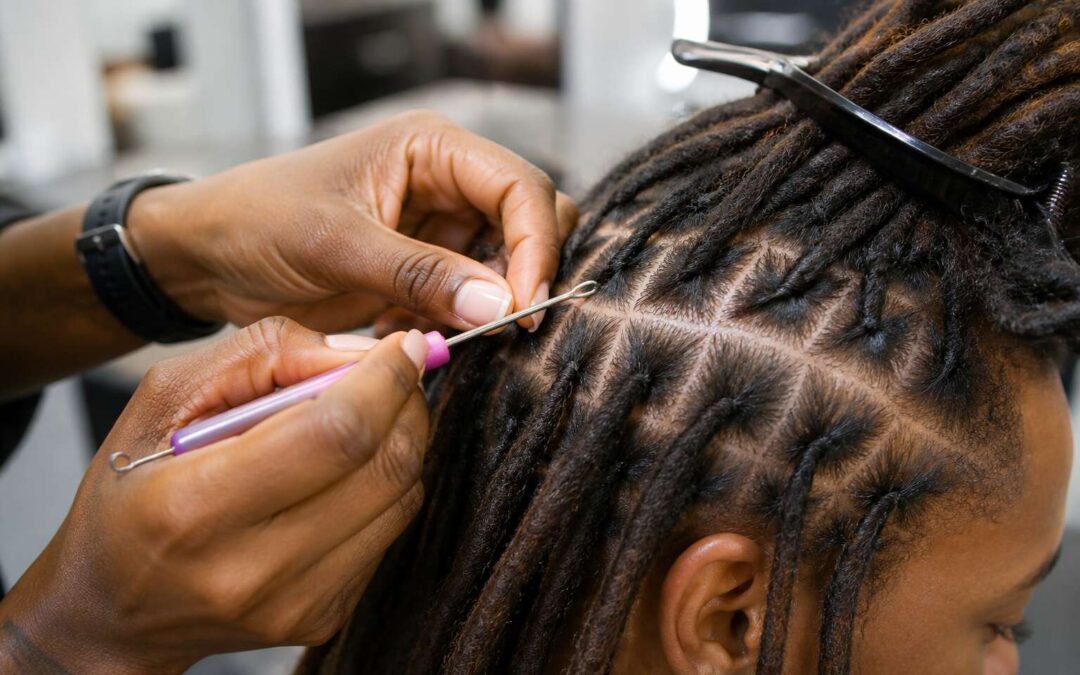
Retouching tight roots requires a different approach than palm rolling. The crochet hook offers precision that manual manipulation cannot achieve. This method is essential for maintaining a neat appearance between salon visits.
The crochet technique is particularly effective for those with mature locs. Loose hairs at the base can compromise the entire structure. This core retouch technique for dreadlocks allows for targeted correction without disturbing established sections. You will need a small hook, typically sized between 0.5mm and 1.0mm.
To begin, separate a row of locs and identify the new growth. Insert the hook into the loose hair at the root, avoiding the scalp. Gently pull the stray strands through the body of the loc. The goal is to catch the flyaways and draw them inward.
Here are some points to consider when using this method for your dreadlocks retouch styles:
– Work on damp, clean hair to reduce breakage.
– Use a smooth, controlled motion to prevent snagging.
– Rotate the hook to create a uniform texture.
Repeat this process in small sections. Pulling too much hair at once can create bulky knots. Focus on the circumference of the root to maintain a solid foundation. This precision separates a professional finish from a rushed job.
The crochet method is also vital for repairing weak spots. It interlocks the fibres tightly, which adds density. This is one of the most reliable core retouch techniques for dreadlocks, ensuring your style remains intact during daily wear. It offers immediate results.
Moreover, this technique aids in blending new growth with the older, more mature hair. It creates a seamless transition that minimizes visible lines. This is a primary concern for many clients seeking dreadlocks retouch styles.
The process requires a steady hand and an eye for detail. Practicing on a mannequin head helps build confidence. Once mastered, the crochet hook becomes an indispensable tool for any loctician. It offers a level of control that other methods lack.
Finally, consider the health of the hair. Avoid aggressive hooking, which can lead to split ends. A gentle touch preserves the integrity of the loc. Regular maintenance using this technique promotes growth and reduces the need for drastic repairs. The result is a clean, resilient hairstyle that stands the test of time. This is the epitome of effective dreadlocks maintenance.
Interlocking (Latch Hook) Method for Low Maintenance
For those seeking longer intervals between salon visits, I have found interlocking offers a compelling solution. The latch hook technique works by weaving the entire root through the loc body, locking the hair into place. This differs from crochet retouch, which targets surface flyaways, while interlocking addresses the foundation. A firm, compact base can extend your dreadlocks retouch styles by weeks, sometimes months.
Interlocking excels when:
- Hair types prone to loosening, such as fine or straight textures
- Clients with sensitive scalps who avoid frequent manipulation
- Busy lifestyles demanding minimal upkeep
This approach suits South Africa’s humid climate, where frizz becomes inevitable without secure roots! Instead of constant palm rolling, interlocking creates a durable solution. The tradeoff is a sturdier loc, yet for many, that is a fair exchange for lasting performance.
Combining Techniques for Customized Results
For clients in South Africa, the most successful dreadlocks retouch styles often emerge from a deliberate fusion of methods, not a single rigid routine. The texture of your hair, your scalp’s tolerance, and the maturity of your locs all play a role. A loctician might use a crochet hook to smooth the new growth at the root, then switch to palm rolling to blend the length. This hybrid approach offers immediate precision without sacrificing the natural drape of the locs.
However, the logic of combination goes deeper. I have seen clients with heavy, long locs where the sheer weight places stress on the follicle. In these cases, the artisan applies a strict interlocking pattern at the base to fortify the anchor point. Then, they employ a crochet needle to tidy the mid-length shaft. This prevents the loc from thinning out over time, a common issue in humid coastal regions like Durban.
When you start mixing these practices, you are effectively building a bespoke maintenance plan. Here is how the logic typically breaks down in a professional chair:
- Interlocking or latch hooking to secure the foundation and manage tension at the scalp.
- Crochet hooking to refine the surface texture on the lower half of the loc.
- Traditional palm rolling to finalize the shape and ensure the retwist feels cohesive.
This sequence addresses the integrity of the root first, then the appearance. It avoids the pitfall of a tight scalp without the loosening of the loc body. When these dreadlocks retouch styles are combined, the result is a resilient, salon-fresh look that withstands the humidity and the demands of daily life. You get the durability of a firm root and the visual softness of a natural, rolled loc. This fluidity in technique is the real secret to long-term loc health and style longevity.
Popular Retouch Styles by Aesthetic
Neat and Tidy Classic Retouch
For clients who equate well kept hair with professional polish, the neat and tidy classic retouch remains a steadfast favourite among dreadlocks retouch styles. This approach prioritises symmetrical parting and disciplined root tension, producing a silhouette that reads as deliberate and composed.
What distinguishes this style is its insistence on consistency. Practitioners often focus on:
- Evenly sized sections across the scalp
- Firm, uniform root tightness
- A smooth, cylindrical shape from base to tip
I have seen how this retouch style transforms unruly growth into a clean canvas. It suits those who prefer their locs to behave with quiet authority, without sacrificing the natural texture that makes each head unique.
Messy or Boho Freeform Retouch
In the diverse world of dreadlocks retouch styles, the aesthetic or bohemian freeform approach offers a refreshing departure from structured uniformity. This method prioritises the natural journey of your hair, allowing it to develop its own unique character and rhythm. Instead of forcing every lock into a perfect mold, this style celebrates the organic twists, bends, and textures that emerge over time. It’s a philosophy of patience and acceptance, where the hair’s individual personality is allowed to shine through without constant interference.
The true appeal of this approach lies in its low-maintenance nature and the sense of personal freedom it provides. You are not bound by the need for perfect symmetry or a strict monthly retouch schedule. Rather, the focus shifts to the overall health of your scalp and the natural separation of the locs. Here is what you can typically expect:
– Minimal root work; you may only palm roll the new growth occasionally to encourage locking.
– The use of natural products like aloe vera or sea salt sprays to support texture without heavy residue.
– A longer gap between salon visits, allowing the roots to establish their own pattern.
This style requires a certain surrender of control, trusting the process of nature to craft a look that is entirely your own. For many, this is the ultimate expression of authenticity, a visual representation of a laid-back and spiritually connected lifestyle. It works beautifully for those with naturally textured hair or anyone who feels confined by the rigidity of other, more precise retouch methods.
Choosing this bohemian path means redefining what a “retouch” means to you. It becomes less about correction and more about mindful care. You might find yourself simply separating young locks at the root to encourage them to mature healthy and strong. Or, you might gently tease the new growth to create a fuller, more voluminous base. The goal is never perfection, but rather harmony with your hair’s natural inclinations, allowing your crown to tell a story of freedom and effortless beauty.
Root Parting Styles (Zigzag, Brick Lay, or Straight)
The parting pattern at your roots is a quiet declaration. It shapes the silhouette and the rhythm of your dreadlocks retouch styles. Straight parts create clean lines, zigzag parts soften the base, and brick lay parts build density.
Here is what defines each style:
- Straight: precise sectioning for a clean, ordered look.
- Zigzag: curved parts that hide the scalp and soften the base.
- Brick lay: offset rows that add volume and camouflage thin areas.
Your retouch respects this pattern. I have seen straight parts feel surgical, while zigzag parts invite movement. The brick lay demands careful sectioning. The choice is not about better or worse; it is about what your nature desires.
Retouch Styles for Different Hair Textures and Lengths
Retouching Fine or Thin Locs
Retouching fine or thin locs demands a different touch than working with thick hair. A heavy hand can cause tension and breakage at the root. The priority is always protecting the delicate new growth while maintaining a neat appearance. For finer textures, a lighter palm rolling technique or gentle interlocking with a small tool often works best, as it minimizes stress on the follicle.
The right approach also shifts with loc length. On shorter locs, the retouch is about defining the root and encouraging a uniform shape. With longer, heavier locs, the focus moves to maintaining structure at the base so the weight doesn’t pull the root loose.
Here are a few guiding principles for this texture:
– Use a lighter product to avoid buildup that can flatten fine hair.
– Opt for interlocking if you prefer a style that requires less frequent maintenance.
– Always ensure the new growth is completely dry before retwisting to prevent mildew.
Ultimately, a successful retouch for any hair type hinges on consistency. Find a method that works for your texture and length, and stick with it to keep your dreadlocks retouch styles looking sharp and healthy between visits.
Retouching Thick or Coarse Hair
It is a peculiar paradox of loc maintenance that the same thick, coarse hair which makes for glorious, hefty locs becomes a stubborn rebel at the root. This texture is often strong, but that strength can work against a neat retwist. If you have ever wrestled with new growth that seems to have a mind of its own, you know the battle is real. The goal is to tame the root without crushing the life out of the locs. This is where the chosen dreadlocks retouch styles must respect the integrity of the strands.
For this hair type, the texture can be dry and prone to shrinkage. This means the retouch is less about adding volume and more about controlling it. A firm palm roll will often offer a sleek finish, but the hair may resist. Using a heavier locking gel can help persuade the cuticles to lay flat, but you must ensure the product penetrates the thick shaft. Another consideration is the loc size. With thick roots, you may find:
– That retwisting too frequently leads to matting at the base.
– The need for a stronger hold formula to prevent frizz.
– That pulling the root taut creates gaps between the loc and the scalp.
These are the specific pitfalls that dictate your approach. The aesthetic of the retouch for coarse hair relies on a clean, defined root that doesn’t look strained. Often, a combination of a crochet hook and a light palm roll provides the best control for this texture, locking the flyaways into the main body without excessive tension. The effort is worthwhile, as a well-executed retouch keeps the heavy locs anchored properly, preventing that dreaded look of roots that are barely holding on.
The length of the locs changes the mechanics of the retouch, as with any texture, but for thick hair it is amplified. On a shorter set, you are encouraging shape formation, so the dreadlocks retouch styles should focus on lifting the root slightly to add dimension. For longer, thicker locs, gravity is the enemy. The retouch must secure the base to distribute the weight, otherwise you risk internal breakage. While thick hair is resilient, paying attention to this tension is key to ensuring your dreadlocks remain a statement of health rather than a casualty of neglect.
Adapting Retouch Styles for Short vs. Long Dreadlocks
Length changes the mathematics of a retwist. Short locs allow for greater reach to the roots. You can be bolder with partings since there is little weight to distort the shape. Long locs pull down with force. This tension demands the retouch guarantee anchorage first.
- Check the root angle for long lengths.
- Match parting width to the scale of the loc.
A long loc needs the root to bear the load. A short loc can hold a more experimental style. The chosen dreadlocks retouch styles must serve the angle of the root as it currently lies. You need to assess the drag gravity will put on the new growth.
Maintenance and Aftercare for Retouched Roots
Washing and Drying Techniques Post-Retouch
Maintenance and Aftercare for Retouched Roots
A fresh retouch transforms your look, but the real work begins when you leave the salon. Your new growth needs gentle handling during the first few days to settle properly. Avoid heavy oils or waxes near the scalp immediately after your appointment, as these can loosen the fresh twists and cause sagging at the base.
Washing requires patience and precision. Wait at least three to five days before getting your hair wet, allowing those new roots to firm up completely. When you do cleanse, focus on your scalp using diluted shampoo applied directly to the parting lines. Rinse thoroughly with lukewarm water, moving downward to prevent frizz from tangling the freshly tightened sections.
Drying techniques matter just as much as washing. Use a microfiber towel to squeeze excess moisture gently, never rubbing aggressively across the roots. A hooded dryer works best for maintaining the integrity of your retouch styles, ensuring the interior of each loc dries fully to prevent mildew or odor buildup.
Consider these essential aftercare habits:
– Sleep with a satin bonnet or scarf to reduce friction and preserve root definition.
– Re-twist loose strands only with your fingers, skipping additional product.
– Schedule your next retouch every six to eight weeks to keep spacing consistent.
Listen to your hair rather than following rigid schedules. Some textures hold a retouch longer than others, and adjusting your routine accordingly prevents unnecessary stress on fragile new growth. With attentive care, your dreadlocks will maintain their crisp appearance while continuing to strengthen beneath the surface.
Moisturizing and Oiling the Scalp and Roots
Your scalp after a retouch is not a desert, though it may beg for water. Fresh tightening leaves roots sensitive, and oil is your ally. Less is more. A few drops of jojoba or argan oil, warmed between palms, pressed along the parting lines, does the trick.
Avoid oiling the scalp directly. That invites buildup,and buildup leads to sagging roots. Focus on the shaft near new growth. Use fingertips, not tools, to distribute oil evenly. This keeps your dreadlocks retouch styles looking sharp without weighing them down. Follow these habits:
- Apply oil twice a week, not daily.
- Choose lightweight oils; skip butter or wax.
Listen to your scalp. If it feels tight, mist with water based spray first, then seal with oil. Balance, not perfume. Healthy roots make happier retouches.
Protecting Retouched Styles While Sleeping
Your retouched roots need a full night of undisturbed recovery. Cotton pillowcases create friction that weakens fresh tightenings. Switch to satin or silk to let dreadlocks retouch styles hold their shape until morning.
I recommend wrapping hair loosely in a scarf, avoiding pressure on the parting lines. Pile long locs above your head in a loose pineapple. This keeps weight off the roots. A bonnet can slide during sleep, so secure it with a silk tie.
Wake up, mist lightly, and refluff. Protecting your work while you sleep is half the battle.
Recommended Retouch Frequency for Longevity
There is a rhythm to retouched roots that most people overlook. The maintenance window after a fresh session determines how long the style will hold its integrity. I have found that the first three days are sacred. The hair needs time to settle into its new tension, and the scalp needs room to breathe.
Recommended retouch frequency depends on your hair’s growth rate and the method used. Most clients with medium density hair come in every six to eight weeks. Those with finer strands may stretch it to ten weeks to avoid stress on fragile roots. For thick or coarse hair, every five to six weeks keeps the new growth from locking into unintended tangles.
A simple schedule helps:
- Week one: gentle misting and light oiling only
- Week three: check for loose roots and retighten as needed
- Week five: assess thinning at the root base
- Week eight: book your next retouch session
Longevity relies on patience. Do not rush the process with aggressive manipulation. Your dreadlocks retouch styles will last longer when you allow the hair to adjust gradually. This is the quiet work that keeps the style looking intentional, not forced.
Troubleshooting and Common Retouch Mistakes
Over-Tightening and Scalp Tension Issues
Over-tightening causes more scalp tension than any other retouch error. I have untangled clients who endured throbbing heads for days because someone believed tighter equals longer lasting. The root needs some tension to hold, but the scalp has limits.
Common signs include redness, tenderness, and even tiny bumps along the hairline. If your dreadlocks retouch styles produce pain beyond the first few hours, the technique needs adjustment.
- Persistent soreness after 24 hours
- Visible scalp dimpling around roots
- Hair breakage near the retouched area
These indicate a lighter touch is necessary. Loosen the grip, switch to a gentler method, or give the scalp a break. Retouching should maintain health, not reduce it.
Preventing Breakage and Thinning at the Roots
Breakage at the root is often the first sign a dreadlocks retouch style is failing. When the hair snaps close to the scalp, the loc loses density over time. I have repaired thinning roots caused by repeated retightening in the same spot. The hair there grows fragile when it cannot move at all.
Troubleshooting means looking at the pattern of damage. If the thinning appears evenly around the loc, the tool might be pulling too hard. If it shows on one side only, the angle of the retouch is likely off. The direction of the pull and the choice of tool determine whether the loc survives.
Common mistakes include retouching wet hair, which stretches and breaks, and using metal tools that catch and tear. These errors compound. Each retouch session that ignores the strain narrows the root a little more.
Managing Frizz and Loose Hairs After Retouching
Frizz after a retouch signals impatience, not poor technique. Rushing the smoothing step lets loose hairs escape the loc and create frizz around it, ruining the clean silhouette. I see this with clients who switch between dreadlocks retouch styles.
A common mistake is attacking frizz with extra moisture. That swells the cuticle and makes hair cling to neighbouring locs. Another uses a fine-tooth comb on dry locs, which tears fibres. Instead, work a crochet hook downward, tucking stray hairs into the shaft.
- Tugging at frizz with your fingers.
- Pulling the hook upward, lifting the cuticle and creating frizz.
- Skipping the final palm roll.
Loose hairs at the parting lines appear when retouch pattern is too wide, a common issue in dreadlocks retouch styles. The solution lies in the angle of your tool, not in extra tension. A steady hand and a mirror check prevent frizz at the crown.
When to Seek Professional Help for Complex Retouch Styles
No one books a dreadlocks retouch because everything is going well. They book because something feels wrong. The most common words I hear in my chair are “I thought the pain would go away!” That hesitation is exactly what turns a small issue into a complex repair.
The warning signs are specific. Persistent soreness lasting more than two days, visible dents in the loc shaft, and hair shedding at the parting lines all point to tension damage, not style choice.
- Redness or inflammation around the follicle
- A burning sensation during retightening
- Loc ends that feel mushy or weak
When these appear, stop home maintenance. Professional locticians have the training to assess root health and adjust their method. Some dreadlocks retouch styles, like interlocking on sensitive scalps or crochet work on thinning hair, require precision that only comes with formal training.