
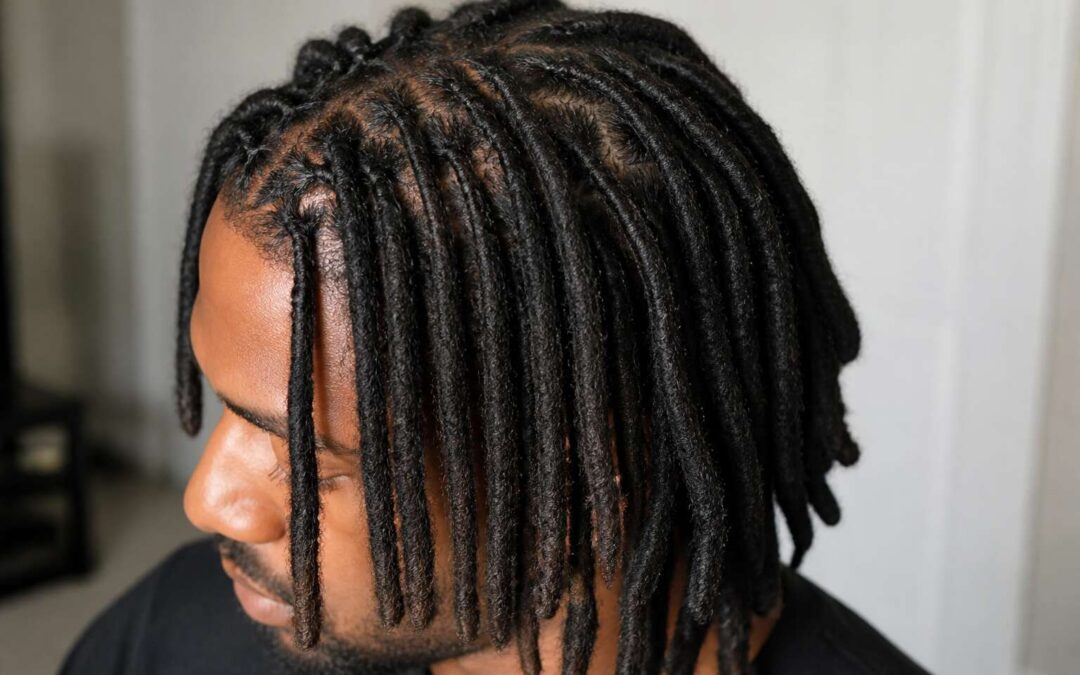
Understanding Gel-Free Dreadlock Formation
How Natural Dreadlocks Develop
Roughly one in three people starting their loc journey abandon it within the first year, often because of product buildup. The truth is that the path to mature locks requires patience, not potions. Choosing dreadlocks without gel is a commitment to letting your hair find its own rhythm, a process that feels less like styling and more like tending a garden.
When you set aside the sticky residues of commercial products, your hair begins to mat on its own timeline. The natural oils from your scalp, combined with friction from a cotton pillowcase or a rough towel, encourage the fibres to tangle and bind. This is the core of how natural dreadlocks develop. The process relies on the hair’s own texture, whether that is coily, kinky, or tightly curled, to form the foundational knots.
The early weeks are the most telling. Your hair will shrink, puff, and resist order. This is normal. The locking process follows a predictable sequence:
1. The beginner stage, where hair is loose and frizzy.
2. The budding stage, where small knots form at the roots.
3. The teenage stage, where the lock tightens but remains soft.
4. The mature stage, where the loc solidifies into a permanent cylinder.
Many first timers struggle because they expect neat ropes within a month. Natural formation is slower. In the humid coastal air of Durban or the dry Highveld winds of Johannesburg, the hair responds differently. Without gel, you must rely on the environment and time. Palm rolling with dry hands, or simply letting the hair be, often yields a more robust, organic result that does not flake or leave white residue on your shoulders. This method honours the hair’s integrity, allowing for a texture that is entirely your own.
Benefits of Avoiding Styling Gels
Your scalp knows the difference. Choosing dreadlocks without gel eliminates the waxy film that suffocates follicles and invites itchiness. In South Africa’s varied climate, from the humid coast to the dry interior, gel-free locs stay cleaner, collect less debris, and dry faster after rain or a workout.
When you skip commercial styling products, your hair remains responsive. A simple rinse with water clears sweat and dust, leaving no cloudy residue. This means less frequent washing and a lighter feel on your neck.
- No flaking on dark clothing
- No crunchy stiffness
- Less odour from trapped product
This approach also saves you money and time, since you never need to reapply or scrub out hardened layers. The benefits compound with each week.
Dispelling Myths About Product-Free Locking
Most hair does not need glue to form a loc. It needs friction. When you stop forcing gel into your scalp, you see the real process: hair twists and tangles on its own. The cuticle lifts and entangles when rolled. That is the lock taking shape.
Dispelling myths about product-free locking starts with one fact. Dreadlocks without gel hold through a mechanical bond.
- Myth: Hair must feel stiff to lock. Truth: soft hair can still be maturing.
- Myth: Gel keeps locs tight. Truth: it creates a smooth shell while the inside stays loose.
The second myth is why so many people scrub their locs with harsh shampoos. They wash away their progress. Without gel, squeezing the sections lets the hair work on its own.
Hair Types That Respond Best
The texture of your hair decides the timeline, not the product. Understanding gel-free dreadlock formation begins with recognizing which hair types respond best. Coarse, kinky textures with a pronounced cuticle naturally interlock through friction. These strands tangle on their own, forming a tight mechanical bond. People of African descent often possess this ideal foundation.
Straight or wavy hair needs more effort. In my experience, the smooth cuticle resists matting, so sections may take months to hold any shape. Yet patience and repeated rolling can still yield results!
- Kinky and afro-textured hair
- Thick, curly locks
- Naturally dry or porous strands
These types respond best to dreadlocks without gel because their surface roughness accelerates locking.
Preparing Your Hair for Dreadlocking Without Products
Essential Pre-Washing Rituals
Most people overlook the wash basin, yet that is where the entire adventure of dreadlocks without gel truly begins. Clean hair needs no artificial support. Residual oils and conditioners cling to the cuticle, preventing the tangling that forms healthy locks.
Begin with a clarifying rinse, using only warm water and a gentle, residue free shampoo. Avoid anything with silicone or perfume. Then, follow a simple sequence:
- Soak the hair thoroughly for two minutes.
- Massage the scalp with fingertips, not nails, to lift debris.
- Rinse until the water runs clear.
- Pat dry with an old cotton towel, never rub.
This ritual strips away the film that would otherwise sabotage the early stages. The result is hair with enough friction to grip itself, naturally. Patience here pays off later, because dreadlocks without gel rely on texture, not artificial hold.
Drying Methods to Enhance Texture
The real secret hides in how you dry your hair. Forget rubbing with a terry towel, that creates frizz, not structure. Instead, squeeze excess water gently, then let your hair rest. Air drying works best for tighter textures, but it demands patience. For those with straighter hair, a diffuser on the coldest setting can coax the cuticle into grasping itself. I have seen this step change everything.
Here are the most effective methods to enhance texture:
- Allow hair to dry partially before any separating or palm rolling.
- Use a cotton t-shirt to blot, never twist.
- Shake roots to encourage natural tangling.
Each technique builds on the pre-washing ritual, ensuring dreadlocks without gel form with integrity.
Proper Sectioning for Even Locks
The fate of your dreadlocks is decided before you twist a single strand. Proper sectioning determines whether your locks form as even columns or merge into unpredictable clumps. I always tell clients in Johannesburg that patience here saves months of correction later.
Work with dry, detangled hair. Separate the hair into squares or triangles using your fingers or a tail comb. The size of each section dictates the thickness of the final lock. Smaller sections create tighter, more defined locks.
- Keep sections uniform in size across the scalp
- Secure each section with a small elastic band
- Recheck the grid after two weeks
Consistency matters more than perfection. When you commit to dreadlocks without gel, sectioning provides the structure that styling products would normally supply. The hair holds its boundaries when you define them clearly.
Natural Texturizing Agents to Try
Roughness matters when you start dreadlocks without gel. The scalp’s natural oils need a grip, and a flat, slippery shaft resists matting. This is where homemade texturizing agents enter!
Brew a strong rooibos tea and cool it. This South African staple adds subtle stickiness without residue. Alternatively, mix ocean salt with warm water in a spray bottle. Your hair will swell and tangle naturally.
- Two tablespoons of sea salt per cup of water
- A squeeze of fresh lemon juice to strip excess softness
- Aloe vera juice for a light, non crunchy hold
I apply these mixtures to slightly damp hair before sectioning. They mimic the gritty feel of unwashed locks while allowing daily rinsing.
Avoiding Product Buildup from the Start
The first honest conversation you have with your hair happens before a single lock forms. You must ask what residues remain from years of conditioners, creams, and oils. Product buildup is the main obstacle to dreadlocks without gel. It coats each strand, smoothing the very roughness that matting requires.
Most people never see their natural hair texture. They have layered manufactured softness over it for so long that the original feel is lost. Preparing for dreadlocks means finding that texture again. This is the work of elimination.
Three signs tell you the hair is ready:
- Water soaks into the strands instead of beading
- The fingers catch on the hair shaft
- The scalp feels tight and clean after rinsing
These markers confirm that the path to dreadlocks without gel starts from an honest place. Your scalp’s own oils become the only product, and that is enough.
Step-by-Step Methods for Gel-Free Dreadlocks
The Twist and Rip Technique
The twist and rip technique is a primal act of hair sculpture. To create dreadlocks without gel, begin with a dry, sectioned strand. The method follows a simple rhythm:
1. Twist the strand between your palms from root to tip.
2. Grip both ends and pull in opposite directions.
3. Repeat the motion down the length of the hair.
This ripping action tangles the fibres into knots. The friction of palms and the tension of the pull create permanent texture. Loose hairs escape during the process; tuck them back into the lock with a gentle twist. This way of forming dreadlocks without gel keeps the hair free of residue and stiffness. The hair moves and breathes, which is what young locks need in a humid climate.
Freeform Dreadlocking Approach
Freeform dreadlocking requires zero effort, zero product, and an indefinite timeline. You stop brushing and let your hair mat on its own schedule. This method of creating dreadlocks without gel depends on your willingness to accept chaos. The results are unique and rarely neat.
The process is neglect at first. Your hair will tangle into irregular clumps. You separate the clumps occasionally to avoid one giant block. You wash and dry normally. That is the entire practice.
Here are the steps:
- Wash with a residue free shampoo.
- Dry with a towel, roughly.
- Pull apart any locks that merge.
- Leave stray hairs alone.
Freeform locking suits South African heat because humidity works as a natural catalyst. Dreadlocks without gel stay pliable and light. No gel means no stickiness. Your hair moves freely. The locks form exactly as they please.
Interlocking for Fine or Thin Hair
Fine hair betrays most locking methods. It slips free from twists, escapes from palm rolling, refuses to mat. Interlocking tames it with a latch hook, a tool resembling a tiny crochet needle. The process is surgical, almost ritualistic. You pull the ends of each section through its own base, creating a loop that tightens into a knot. Each pass stitches your scalp into permanence.
Start with damp hair, freshly washed and towel dried. Section it into neat grids. The smaller the section, the sturdier the lock. Then:
- Insert the hook through the root.
- Catch a few strands and pull them downward.
- Rotate the lock a quarter turn and repeat.
This hand-sewn architecture suits fine hair because it bypasses natural matting. The dreadlocks without gel hold shape through sheer mechanical force. They remain pliable, never stiff. The scalp stays visible, which is normal for fine textures. A quiet method, unforgiving of laziness, but patient hands earn locks that endure.
The Towel Rub Method
I have seen many locking methods, but the towel rub method feels the most elemental. All you need is a clean terry cloth towel and hands that are not afraid of friction.
- Divide freshly towel-dried hair into small sections.
- Place the towel at the root and rub each section in a circular motion.
- Work from root to tip, applying steady pressure for two minutes per section.
This abrasion encourages the hair cuticles to snag and mat. For those who want dreadlocks without gel, this technique delivers a dry, gritty texture that holds on its own. No products, no residue! Just the slow persistence of rubbing.
Crochet Hook for Tight Locks
The crochet hook method demands control. Other techniques rely on time to do the work. This approach uses a simple tool to create immediate structure. For anyone pursuing dreadlocks without gel, the hook offers a pathway to tight, compact locks that hold their shape.
The motion is simple. Insert the hook into the lock, catch a few fibers, and pull them through the core. Each repetition collapses the structure further, binding the hair into a dense, unified mass. The psychological shift is notable: you are not waiting for tangles to form, you are actively assembling each knot.
Work in small, deliberate passes:
- Keep the hair completely dry for maximum friction.
- Insert the hook at the root and pull outward.
- Alternate directions to prevent straight-line grooves.
The result, I have found, is a lock that feels almost machined in its consistency, a testament to deliberate handwork over passive neglect.
Combining Methods for Best Results
Crafting dreadlocks without gel demands a layered approach. I recommend starting with twist and rip to segment the hair, then letting freeform act for a fortnight. Interlocking follows to fix the roots, and crochet hook work tightens the shaft. This sequence is the difference.
- Twist and rip for initial division.
- Freeform for natural knotting.
- Interlocking for root security.
- Crochet hook for density.
Each step compensates for the others. Towel rub, added occasionally, introduces texture without disrupting structure. The outcome is durable, consistent locs achieved through intentional combination.
Maintaining Dreadlocks Naturally Without Styling Gels
Cleansing Without Harmful Residues
When you commit to dreadlocks without gel, your cleansing routine becomes a ritual of pure restoration. Standard shampoos often leave behind silicone and wax that mimic the very residue you are trying to avoid. Instead, focus on water-soluble, plant-based washes that lift dirt without coating the hair shaft.
- Baking soda paste, diluted to a slurry, breaks down sebum without stripping natural oils.
- Apple cider vinegar rinses rebalance pH and dissolve mineral buildup from hard water.
- Herbal teas, like chamomile or nettle, add gentle astringency while softening the loc.
For dreadlocks without gel, the goal is a squeaky-clean feel that still leaves hair supple. Rinsing thoroughly for several minutes is essential, as trapped suds become future lint. This method prevents flaking, odor, and the dull stiffness that plagues product-heavy styles. A residue-free scalp stays healthy, letting each loc mature with strength and shine.
Retwisting Using Natural Ingredients
Retwisting is where a loc journey either tightens into discipline or locks in disaster. Commercial gels always promise a crisp root, but they deliver a hardened shell that traps sweat and irritates the scalp. For dreadlocks without gel, the retwist becomes a delicate act of rehydrating the base and reshaping new growth using things found in a typical South African kitchen.
Aloe vera pulp creates a setting effect without suffocating the follicle. Flaxseed gel, when strained and cooled, offers a flexible hold that moves with the hair. A splash of rooibos tea thins the mixture while strengthening the shaft. Use this combination sparingly, because too much moisture defeats the purpose.
- Mix 2 tablespoons of fresh aloe gel with 1 teaspoon of strained flaxseed gel.
- Stir in 50ml of cooled rooibos tea until the paste reaches a smooth consistency.
- Apply the mixture only to the new growth, never the loc length.
After applying, twist each section and let it set for 20 minutes. This route allows the root to lock without the waxy residue that attracts dust and lint. Dreadlocks without gel thrive on this balance of moisture and tension, keeping the scalp breathing while roots stay obedient. Air drying preserves the flexibility that prevents snapping, so skip the heat. The practice rewards patience, not shortcuts.
Nighttime Protection for Frizz Control
A loc’s integrity is often decided long after the mirror is out of sight. The pillowcase is the silent saboteur of the night, a cotton trap that pulls moisture from the roots and grooms frizz into a halo of chaos. For anyone committed to dreadlocks without gel, the evening routine deserves the same reverence as the morning twist. The scalp has already spoken through the day; night is when new growth decides whether to stay obedient or rebel.
Protection starts with friction control. Sleeping on a satin or silk surface reduces the tugging that weakens the root.
1. Swap cotton pillowcases for a satin alternative to limit breakage.
2. Gather the locs loosely at the crown, never tightly bound.
3. Wrap the hair in a silk scarf or bonnet to seal in the moisture from your last rinse.
The result is a morning that requires less fuss. Dreadlocks without gel respond to calm handling, and the hours of sleep should be a continuation of that patience. A smooth surface keeps the frizz at bay, allowing the locs to remain defined and cooperative until the next wash day.
Troubleshooting Slippery Locks
Slippery locks refuse to hold their structure. The hair feels polished, almost glassy, and the twists loosen within hours. For anyone maintaining dreadlocks without gel, this signals an imbalance in the washing routine.
Silicon-based conditioners leave a coating that repels water. So does over-rinsing with hard water. The fix is a clarifying wash with a residue-free shampoo. I recommend warm water, not hot. Agitate the scalp for a full three minutes.
- Twists unravel before the evening ends
- Hair feels slick even after air drying
- New growth slides away from the root
Salt water is a natural roughening agent. A weekly spray of sea salt and water adds grip without coating the hair. This preserves the integrity of dreadlocks without gel while encouraging the fibres to bind.
Knowing When to Get Professional Help
Even the most dedicated natural dreadlock enthusiast hits a wall. You have followed every gentle washing ritual and still your roots look like a confused bird’s nest. There comes a moment when the DIY approach fails, and that is not a defeat. It is a signal.
Professional help becomes essential when your scalp starts protesting. Persistent soreness, unexpected flakes, or friction sores that just will not heal are not character builders. They are red flags. A loctician can assess whether your dreadlocks without gel are actually locking or just tangling into a mess.
Watch for these signs:
– Your hair feels like felt after months of care
– Sections merge into one another without your consent
– You cannot get a comb through your roots without pain
Your hair’s integrity matters more than your pride. Seeking a professional for a reset keeps your dreadlocks without gel healthy for the long run.
Long-Term Care for Healthy Dreadlocks
The first year with dreadlocks without gel is a lesson in patience. Your hair will look messy before it looks mature. That is normal. The second year brings a shift: your locks settle, and maintenance becomes less about fixing and more about observing.
Here is what changes once your locks mature:
– Shrinkage stabilises
– Retwisting becomes less frequent
– Natural oils balance out
– You notice which habits produce lasting results
Long-term care is not complicated. It is consistent. You check for lint, debris, and itchiness after workouts or dusty commutes. You practice the same separation rituals, but with lighter hands. Dreadlocks without gel reward people who remain steady when nothing happens for months.
The goal is not perfect locks. It is healthy hair that grows without chemical interference. Your daily choices determine that outcome more than any product could.