
The Basics of Dreadlocks and Hair Integrity
How Dreadlocks Form
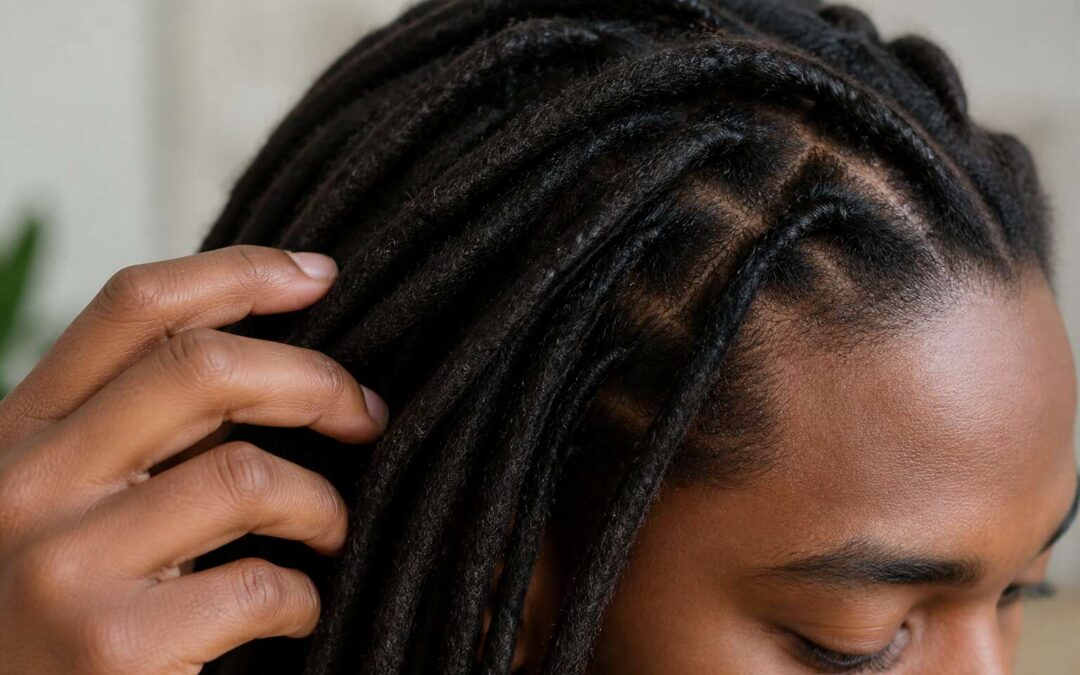
Dreadlocks form when individual hair strands abandon their separate paths and fuse. The cuticle, a protective outer layer, roughs up and allows neighbouring strands to tangle permanently. This is not a chemical change, only a physical regrouping. The follicle, where growth happens, remains unaffected by locking.
The process takes patience. After you section the hair and stop combing, shed hairs interlace with growing ones. Over months, the bundle tightens into a lock. If you are asking is dreadlocks bad for your hair, the answer depends on how much tugging and twisting your scalp endures during this phase.
A few realities to grasp:
– New locks start as loose coils, often coaxed with backcombing or palm rolling.
– Mature locks have settled into their final cylindrical shape.
When people ask is dreadlocks bad for your hair, they usually mean early breakage. Over manipulation, the constant retwisting and pulling, causes strain, not the locking itself. The hair does not vanish; it simply reorganises.
Impact of Locs on the Hair Shaft
Many clients ask me if locs ruin the hair from the inside. The truth is the hair shaft remains structurally sound. Locs actually shield the strand from friction and UV exposure. So is dreadlocks bad for your hair? Not by default. The damage comes from external pressure, not the locking itself.
- Excessive palm rolling stretches the root
- Metal combs tear the cuticle
- Tight styles stress the follicle
I have seen healthy locs thrive for decades. The follicle keeps producing keratin as long as blood flow continues. What matters is how you maintain the scalp between retwist sessions. That answer to is dreadlocks bad for your hair depends on your hands, not your hair. The shaft is resilient, but it responds to neglect with thinning.
Understanding Hair Growth Cycles
Your scalp produces roughly 0.35 millimetres of new hair every day. Over a month, that means about a centimetre of fresh keratin emerges from the follicle. The hair you lock today is not the hair you will carry next year. The growth cycle moves through distinct phases:
- Anagen: active growth lasting two to seven years
- Catagen: a short transitional period
- Telogen: resting before natural shedding
During anagen, the follicle anchors the strand firmly, and locking does not interrupt this process. The real concern arrives when tension from retwisting pulls at the root during catagen or telogen. At those moments, the follicle is more vulnerable. So is dreadlocks bad for your hair? Only if you fight the cycle instead of working with it. Hair that sheds naturally within a loc is normal. Asking is dreadlocks bad for your hair ignores the biological timeline underneath. Forcing shed hair to stay put creates stress.
Factors That Influence Hair Health
Your hair’s integrity depends on more than the style you choose. The question “is dreadlocks bad for your hair” often ignores the real variables: moisture balance, protein structure, and how you handle the scalp. In South Africa’s climate, humidity fluctuates wildly between coastal and inland regions. That shift alone can change how your locs behave!
Consider what actually influences hair health when locking:
- Porosity: how readily your strand absorbs and releases water
- Elasticity: the hair’s ability to stretch and return without breaking
- Scalp condition: sebum production, flakiness, or dryness
These factors decide whether locking protects or damages. I have seen brittle locs from over-washing and weak roots from neglect. The answer to is dreadlocks bad for your hair rests in these daily choices, not the style itself.
Potential Risks of Wearing Dreadlocks
Traction Alopecia and Tension Damage
Every twist and palm roll adds a layer of tension to your hair follicles. Over months, this constant pull leads to traction alopecia, a form of hair loss that develops without warning. The scalp’s delicate roots cannot handle sustained strain, and the result is a receding hairline or thinning patches that often refuse to grow back.
Dreadlocks distribute weight unevenly, particularly when wet or decorated. That is when the damage intensifies. Follicles weaken, and the surrounding tissue becomes inflamed, a condition known as folliculitis. If you are asking is dreadlocks bad for your hair, this persistent tug demonstrates the answer. The typical damage progresses as follows:
- Microscopic tearing at the root
- Reduced blood flow to the follicle bed
- Separation of the hair shaft from its anchor
Without intervention, tension damage escalates into permanent bald spots. The scalp’s natural elasticity has limits, and locs exceed them daily. South African hair types, often tightly coiled, carry higher risk because each strand responds more intensely to pulling force.
Breakage and Shedding Concerns
Breakage and shedding occur quietly. The hair shaft, weakened by constant twisting and tightening, snaps mid strand. Each growth cycle produces fresh hair that must survive years of manipulation, and many strands break.
Shedding is natural, but inside locs it turns problematic. Loose hairs become trapped in the matted cylinder, accumulating into dense tangles. This trapped shedding pulls on roots and adds unnatural weight. The question is dreadlocks bad for your hair finds its answer here.
- Insufficient cleansing stiffens strands with buildup
- Palm rolling friction abrades the cuticle
- Rough fabrics cause mechanical breakage
South Africa’s shifting humidity expands and contracts each coil, adding stress. Frayed ends and fuzzy wisps signal breakage! Trapped hairs form micro knots that require cutting, and every lost strand reduces density.
Dryness and Moisture Retention Issues
Dryness follows a predictable path inside locs. The natural oils from the scalp struggle to travel down the twisted shaft, leaving the lengths parched. Moisture, once absorbed, becomes trapped in the dense matting instead of evaporating evenly. The outer layer feels dry and brittle while the interior stays damp, a condition that invites mildew in humid South African weather.
This imbalance shows why people ask, is dreadlocks bad for your hair. Every wash becomes a risk. Harsh shampoos strip what little sebum remains, while heavy butters seal moisture out rather than locking it in. The hair loses elasticity and snaps under light tension.
Even a careful routine cannot fully replace the natural flow of oils along a loose strand. The loc remains a closed system. Moisture cannot move freely, and the damage compounds with each passing month, leaving the hair fragile and prone to split ends.
Scalp Irritation and Product Buildup
Most people blame the hair when their scalp starts throwing tantrums. In reality, the culprit is often the mountain of product sitting underneath those locs. Butters, gels, and waxes build up into a stubborn layer that traps sweat and dead skin against the skin. The result is redness, flaking, and a persistent itch that no amount of scratching fixes.
Common irritants include:
- Residue from styling wax that hardens over time
- Pomades that mix with dust and grime
- Conditioners rinsed improperly and left behind
Scratching opens tiny wounds, and bacteria love those wounds! Before long, the scalp is inflamed and the roots feel tender. This is where is dreadlocks bad for your hair becomes a legitimate question. The locs themselves are neutral. The buildup decides your fate.
Risk of Matting and Fiber Damage
Matting is a distinct hazard. Loose hairs from shedding can weave into neighbouring locs, forming a dense felt that tightens at the root. This continuous tension stresses the follicle and can lead to permanent hair loss if ignored.
Fiber damage follows a separate path. Chemical relaxers, dyes, or bleach penetrate the cuticle and degrade the cortex. Over-manipulation, like aggressive retwisting or tight rubber bands, also snaps the fiber mid-shaft.
– Improper drying leaves the core damp, promoting fungus
– Sleeping on rough cotton causes friction breakage
– Using metal combs tears the cuticle
For anyone asking is dreadlocks bad for your hair, the answer lies in these mechanical threats.
Dreadlock Styles and Hair Type Considerations
Hair Texture and Loc Formation
Dreadlock Styles and Hair Type Considerations
The question of is dreadlocks bad for your hair becomes more complex when you factor in South Africa’s diverse climate and the natural spectrum of hair textures across the country. From the humid coastal air of Durban to the dry Highveld winters, your environment interacts with your hair’s inherent structure. Every strand reacts differently to the matting process, and understanding this relationship is the foundation of a healthy loc journey.
Hair Texture and Loc Formation
Consider the porosity of your hair, which determines how readily it absorbs and retains moisture. Low porosity hair has tightly bound cuticles that resist water, making initial loc formation slower but often resulting in denser locs. High porosity hair, with its raised cuticles, may loc quickly but requires consistent hydration to avoid weakness. Addressing the question honestly involves recognising that your texture dictates how your locs will mature.
The thickness of individual strands also influences the final appearance. Coarse, wiry hair is often considered ideal for locking because it grips itself naturally without excessive manipulation. Fine hair, however, demands a gentler approach to avoid breakage at the root.
– Type 4 hair, with its tight zigzag pattern, typically forms locs with minimal coaxing.
– Type 3 hair, with its defined curls, may require more palm rolling to encourage the locking process.
– Type 1 and 2 textures, common in people with European or Asian heritage, can loc but often need interlocking or careful backcombing.
Every loc style carries its own set of considerations. Freeform locs allow the hair to find its own shape, which works beautifully for very coily textures, but this style can cause uneven tension for those with looser waves. Sisterlocks, which use a grid pattern and small sections, are a superb choice for finer hair because they distribute weight evenly across the scalp. Chunky locs, meanwhile, can feel heavy on the scalp if your strands are thin or your hair is long, so many choose this style for its visual impact rather than its practicality with a delicate hair type. The final look, whether you choose traditional locs, palm rolled locs, or a more contemporary style, always depends on the daily care you provide. This is where the real answer to is dreadlocks bad for your hair takes shape. It rarely is, but only when the journey respects your natural texture and your chosen method aligns with your lifestyle.
How to Determine Suitability for Your Hair
Before committing to a loc style, I ask clients to audit their daily habits rather than just their curl pattern. Ask yourself how much time you can actually devote to retwisting or interlocking, because a style demanding weekly salon visits becomes futile on a busy schedule. In my experience, the answer to is dreadlocks bad for your hair often lies in this mismatch between lifestyle and commitment.
Consider your history with chemical relaxers or colour, as these alter the hair shaft’s resilience. South Africa’s sun and pool exposure add further stress. Suitability also depends on your scalp’s tolerance for tension.
- Assess your weekly maintenance window honestly.
- Check for prior damage near the roots.
- Evaluate your tolerance for retwisting tension.
Making this determination protects you from waking up to breakage. When the chosen style respects your strand’s capacity and your real routine, is dreadlocks bad for your hair becomes a non-issue.
Comparing Methods: Twist and Rip, Interlocking, Freeform
Your loc method should respect your hair’s natural behaviour. Twist and rip suits coils that grip easily, though it can stress fragile ends. Interlocking offers a neat root for looser textures, but it requires skill to avoid scalp irritation. Freeform leaves everything to nature, which suits a patient person with resilient hair. Compare these approaches against your daily reality. A busy Johannesburg commuter may prefer interlocking’s longer intervals between maintenance. A student with a tight budget might choose freeform entirely. The honest answer to is dreadlocks bad for your hair depends on this match between your chosen method and your strand’s limits. Some methods pull more at the root, others allow tangling to progress unchecked.
Think about what your hair can tolerate before you commit:
- Your hair’s natural elasticity
- Your scalp’s sensitivity to tension
- Your willingness to embrace uneven stages
A method that fights your texture will cause breakage. A method that works with it becomes sustainable.
Best Practices for Maintaining Healthy Dreadlocks
Washing and Drying Loc Care
The real culprit behind loc damage is water left sitting in the core of a hair fiber. I have watched healthy locs unravel into frizz when clients skip proper drying. Washing demands patience. Dilute your shampoo, massage the scalp gently, and rinse until water runs clear. This keeps residue from clinging to the shaft. Then drying deserves equal care. Damp locs invite mildew and weaken fibers. Here is a steady routine for South African homes, where humidity shifts quickly:
- Squeeze out excess water with a microfiber towel
- Air dry fully before covering or tying
- Never sleep on wet locs
This approach restores confidence in loc health. So is dreadlocks bad for your hair? Only when care shortcuts leave roots and shafts vulnerable.
Moisturizing and Sealing Hydration
Moisture gives locs their bounce, yet many people still wonder is dreadlocks bad for your hair when strands feel straw like. The culprit is usually an imbalance between hydration and sealing.
Water alone evaporates quickly under the African sun. A humectant spray, followed by a plant based oil, creates a barrier that holds moisture inside the cortex. I have found that aloe vera juice works beautifully as a base for my own locs. It softens without leaving residue.
- Use a spray bottle with aloe and rose water
- Seal with marula oil while locs are slightly damp
- Refresh every two days in dry months
When this rhythm holds, the question of is dreadlocks bad for your hair fades into a simple matter of maintenance. Healthy locs depend on consistent rehydration, not on expensive products.
Retwisting Frequency and Techniques
Retwisting frequency depends on your hair type and the look you want. Too frequent retwisting places tension at the root. Too infrequent retwisting leaves new growth unruly and uneven. I have settled into a rhythm of every four to six weeks. This keeps the parting clean and the follicle unbothered. The question of is dreadlocks bad for your hair usually rests on technique, not the style itself.
How you retwist matters more than when. Use a lightweight twisting cream and palm roll the new growth gently. Avoid interlocking unless your loctician is highly experienced, since that method can stress the shaft. Watch for these signals:
- Roots become puffy or undefined
- New growth passes a few centimetres
- The base of the loc feels soft and loose
When you address these signs early, you avoid matting and weak points. A loose, patient hand keeps the loc structure sound and your scalp at ease.
Choosing Safe Hair Accessories
One tight rubber band can create a permanent dent in a loc. When someone asks is dreadlocks bad for your hair, I point to their accessory drawer. Heavy clips and rigid elastics pull on the root with every movement, and that tension over time leads to weak spots.
Safe accessories allow the loc to move naturally. I prefer satin covered scrunchies and smooth wooden beads. For a list of what works well:
- Silk or satin hair ties for daily wear
- Beads with wide, polished holes that slide easily
- Soft fabric headwraps that do not cinch too tightly
I also rotate where I place each accessory to avoid stressing one spot. A loose style at night, like a braid or a simple twist, prevents friction against your pillowcase. The question of is dreadlocks bad for your hair becomes a matter of how carefully you treat the little things.
Avoiding Damaging Habits
The South African sun can be relentless on locs. It bleaches the cuticle and leaves hair brittle. When clients ask me is dreadlocks bad for your hair, I point to daily habits rather than the locs themselves.
Swimming is another concern. Chlorine and salt water strip natural moisture, leaving locs dry and prone to breakage. Rinse thoroughly with clean water before and after a swim!
Watch for these common mistakes:
– Twirling or pulling on loose strands
– Tying locs back while wet
– Skipping regular scalp massages
A silk bonnet absorbs less moisture than cotton and prevents friction while you sleep. Monthly trims keep ends healthy without sacrificing length. Healthy locs reward consistent care.
Professional Maintenance and Scalp Care
Some people assume locs damage hair. Professional maintenance proves otherwise! As a loctician, I spot stress points along the hair shaft before they become breakage. I recognize early signs of scalp irritation you might miss at home. The question is dreadlocks bad for your hair often depends on who cares for them.
Scalp care demands its own discipline. Product buildup hides beneath healthy-looking locs. A professional cleanser with chelating agents removes mineral residue from hard water. Exfoliation every four weeks stimulates circulation without pulling roots.
- Schedule a tension check every six weeks.
- Ask for moisture treatment during each visit.
- Inspect parting patterns for thinning.
Professional maintenance is protection for your follicles. Neglect causes damage, not the locs.
Myths and Facts About Dreadlock Damage
Does Bacterial Growth Occur in Locs?
A common worry asks is dreadlocks bad for your hair because of hidden bacteria. The scalp naturally hosts a microbiome, just like skin anywhere on the body. The real question is whether locs create an environment where harmful bacteria multiply out of control.
In my experience, the answer depends on moisture and hygiene. When locs are washed and dried thoroughly, bacterial growth stays comparable to loose hair. But when moisture gets trapped in a dense loc, especially after swimming or heavy sweating, the damp core becomes a site for bacterial overgrowth.
- Leaving locs wet for hours
- Using heavy products that seal in moisture
- Skipping scalp cleansing for weeks
These habits raise the risk of odour and irritation. Yet the locs themselves are not inherently unhygienic. The issue is neglect, not the hairstyle. So when someone asks is dreadlocks bad for your hair, the honest answer is that bacterial growth is a maintenance concern, not a reason to avoid locs.
Can Dreadlocks Stunt Hair Growth?
I hear this question often from clients who fear their locs have halted progress. The myth claims locking hair somehow tells the follicle to stop producing. That is false. Growth originates at the scalp, not along the shaft. A dense loc never reaches the root. What people interpret as stunted growth is usually end breakage, which masks new length.
Shrinkage adds to the confusion. A fresh loc that shortens after washing looks like stagnation, but the hair has simply coiled. The follicle keeps working regardless of style. One clear distinction matters:
- Heavy locs do not pull roots out unless tension becomes extreme.
- Finger retwisting avoids follicle stress better than tight tools.
- Shedding is normal; a loc traps the shed strand while new hair continues.
So the verdict on is dreadlocks bad for your hair for growth is straightforward. Locs do not stunt anything. They reshape the appearance of length, and that is a style choice, not a biological defect. People often blame the hairstyle when the real culprit is aggressive manipulation. My observation from years of work? Patience solves most length complaints.
Are Dreadlocks Unprofessional or Unhygienic?
The idea that dreadlocks signal a lax attitude toward work or washing is one of the more persistent myths in South African offices. A loc’d professional still shows up on time, meets deadlines, and showers daily. Hairstyle does not correlate with competence, though bias sometimes makes it feel that way.
Hygiene claims also fall apart under scrutiny. Clean locs smell and behave like clean hair. The real issue is improper drying or product buildup, not the style itself. So is dreadlocks bad for your hair? No. But skipping a proper wash routine will make any head look neglected, locs or otherwise.
- Company culture and dress code policies
- Visible grooming versus hair health
- Outdated perceptions versus actual performance
The myth persists because people confuse unfamiliarity with fact. Dreadlocks require maintenance, not excuses.
What Research Says About Loc Health
Is dreadlocks bad for your hair? Research on loc health suggests the opposite. A growing body of evidence indicates that locs protect hair by reducing daily manipulation. The hair shaft stays intact when the style is formed without excessive tension.
Myths persist because they offer simple answers. One says locs make hair brittle from the inside out. Another claims locs permanently damage the roots. Neither holds up under clinical observation. Studies on African hair types show that locs maintain their structural integrity for years when washed and dried properly.
My clients in Johannesburg often ask if they are causing harm. I tell them to look at their routine, not the style! The fear of loc damage comes from seeing neglected heads, not from the locs themselves.