
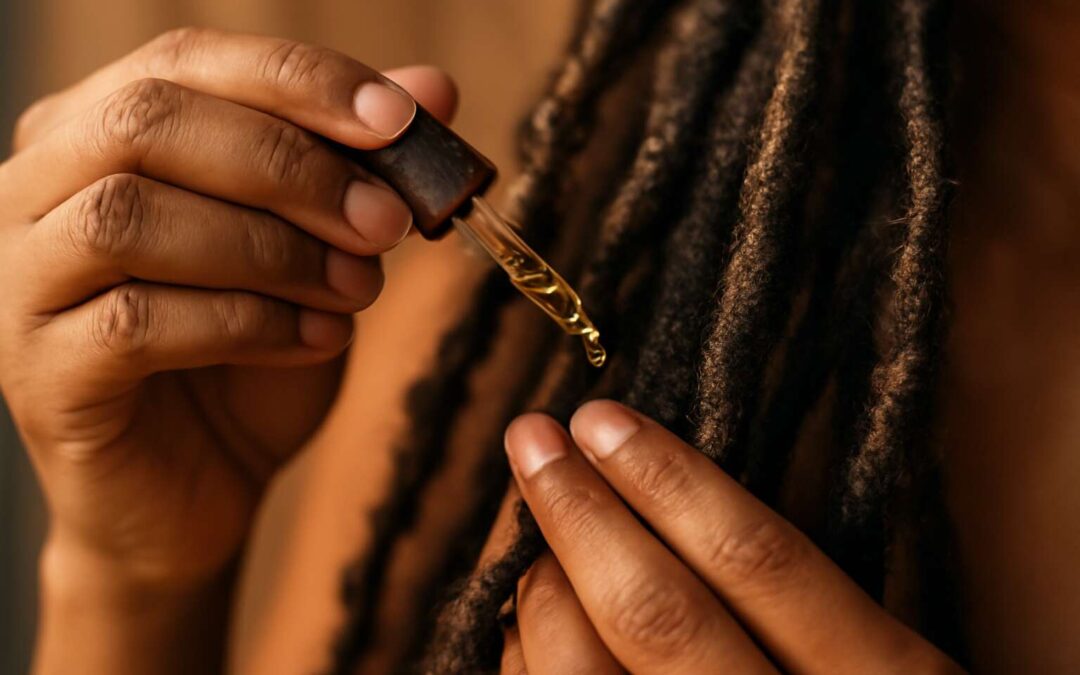
Foundational oils and dreadlock care basics
Choosing the right oils for dreadlocks
Foundational oils anchor dreadlock care with a patient, wind-brushed grace. If you’re curious how to oil dreadlocks, begin with that quiet trio of moisture and balance that keeps strands flexible rather than brittle. These oils speak to scalp health and hair texture alike, offering a veil of nourishment without overwhelming the lock. In South Africa’s sunny mornings and late-afternoon winds, a thoughtful blend matters!
- Jojoba oil — lightweight, mirrors natural sebum, conditions without heaviness.
- Argan oil — vitamin E-rich shield that adds shine and resilience.
- Coconut oil — deep moisture with polish, best for lighter application on dreads with caution on build-up.
- Castor oil — a thicker kiss of gloss that can help seal moisture where needed.
Choosing the right oils for dreadlocks is a balancing act—climate, scalp sensitivity, and personal texture murmur in harmony as one navigates the day’s light and shade.
Understanding scalp health and oil balance
Balance is the quiet engine behind healthy dreadlocks! South Africa’s sun and wind test every strand, making foundational oils a subtle shield for scalp and shaft alike. “Healthy dreadlocks start with balanced moisture.” The idea isn’t splashy; it’s practical, rooted in the scalp’s own rhythm.
Foundational oils support scalp health and oil balance by aligning with natural sebum, smoothing texture, and preventing brittleness. They offer a light film that helps lock feel flexible rather than stiff, without overwhelming the lock. Understanding this balance keeps strands resilient as the seasons shift.
- Scalp health as the anchor for glossy, flexible dreadlocks
- Oil balance to prevent buildup and itch
- Environmental factors like sun, wind, and indoor humidity in SA
When approaching how to oil dreadlocks, focus on balance, not application volume. The aim is to support moisture, preserve sheen, and respect the hair’s texture without creating grease or stiffness.
Frequency of oiling by hair type
Foundational oils glide through dreadlocks like morning sun over the Karoo. Balance is the quiet engine behind healthy strands, especially in South Africa where the sun and wind test every strand. When exploring how to oil dreadlocks, approach with a light hand and a listening scalp—let texture breathe while a whisper of moisture keeps it supple!
- Fine or low-porosity hair: lighter oils and infrequent touch keep shine without heaviness.
- Medium porosity and normal texture: a balanced approach maintains flexibility and reduces buildup.
- Coarse or high-porosity hair: richer oils and a measured cadence protect softness.
Climate and lifestyle in SA matter; the goal is resilience—soft, glossy dreadlocks that move with wind and sun, not stiffness or grease.
DIY vs store-bought oil blends
Foundational oils are the quiet backbone of dreadlock care, gently gliding through each coil like morning light over Karoo plains. In South Africa’s sun and wind, they lend a soft resilience that protects and nourishes. When you wonder how to oil dreadlocks, start with a light, balanced base.
DIY blends reward patience—tailor the glide to your hair’s porosity and climate, mixing jojoba, argan, or grapeseed for a breathable veil. Store-bought blends offer convenience and stability, keeping fragrance and texture consistent for daily wear without the guesswork.
- DIY blends: customization, aroma, and control over density
- Store-bought blends: consistency, ready-to-use formulas, and travel friendliness
- Foundational oils to consider: pure jojoba, argan, and grapeseed base oils
Safety and allergy considerations when applying oils
Foundational oils anchor dreadlock care. In South Africa’s sun and wind, a light, balanced base keeps coils calm and scalp protected. With temperatures regularly nudging past 30°C, the right foundation matters. When considering how to oil dreadlocks, start with a steady base that respects porosity and climate.
- Pure jojoba: closest in texture to sebum; lightweight and non-greasy.
- Argan oil: rich in fatty acids, helps soften and shield.
- Grapeseed oil: a breathable veil that won’t weigh down tight locs.
Allergic reactions are real. Observe for redness, itching, or swelling after your first application. If any irritation appears, discontinue use and consult a clinician. Some people react to fragrant blends or essential oils; opt for fragrance-free formulas and pH-friendly, non-comedogenic bases. Store oils away from heat and sunlight.
Oiling techniques and methods
Pre-wash oiling versus post-wash oiling
Turns out, a striking 7 in 10 SA dreadlock wearers report smoother washes when timing oiling right. Few things are as satisfying as mastering how to oil dreadlocks, especially when timing saves you a frizz-fest. Pre-wash oiling softens scalp buildup and loosens grime so your wash day feels smoother. Post-wash oiling seals moisture, reduces breakage, and keeps frizz at bay on Pretoria’s dry days. In our SA climate, tiny quantities go a long way—think a pea-sized dab, then migrate from scalp to tips.
- Pre-wash oiling: apply sparingly to scalp and dreadlocks, massage gently, rinse thoroughly.
- Post-wash oiling: apply a small amount to the ends and mid-lengths while damp, avoid over-saturation.
- Frequency: adjust by season and activity, not every day.
Keep an eye on residue; if you notice shine behind the ears or residue at the roots, scale back.
Massaging oil into the scalp for even distribution
Across South Africa, 7 in 10 dreadlock wearers report smoother wash days when oil is distributed evenly through the scalp. That energy shapes how to oil dreadlocks: a mindful, feather-light touch that respects each curl.
Massaging oil into the scalp for even distribution relies on the pads of the fingers in gentle, circular motions, not heavy pressure. The aim is steady contact that invites moisture to travel from roots to ends.
- Fingertips only—no nails scraping the scalp.
- Map the scalp in slow circles to encourage uniform spread.
- Keep sessions brief to maintain balance and avoid over-saturation.
On Pretoria’s dry days, this approach helps keep dreadlocks looking calm and well hydrated.
Oiling locked strands vs scalp-only application
In a city that never dries out, dreadlocks crave a measured blessing of oil. If you’re asking how to oil dreadlocks, start with intent: should the moisture travel from scalp to shaft, or ride along each lock from root to tip?
The choice can be explored with quiet clarity:
- Locked strands: focus on providing moisture along the length of the lock, with even distribution to prevent buildup.
- Scalp-only application: concentrate at the scalp to encourage moisture movement down the shaft.
The aim is balance, not excess. By choosing the targeted route—either locked strands or scalp—you shape a healthier look that resists dryness, especially on South Africa’s dry days.
Sealing with natural butters or essences after oiling
In a city that never dries out, even dreadlocks crave a measured blessing of oil. When considering how to oil dreadlocks, balance becomes the only luxury you can afford.
Oiling techniques and methods answer the question how to oil dreadlocks with quiet discipline: route the moisture either along the shaft of each lock or dwell at the scalp to invite downward movement. The aim is even distribution without a glossy fog that reads as buildup, especially on crisp South African days.
Sealing with natural butters or essences after oiling locks the moisture in and adds a subtle sheen.
- Shea butter for a deep, creamy seal
- Mango butter for a light, breathable coating
- Rosewater essence for fragrance and balance
This approach respects hair integrity and local climate, offering a refined, sociable look.
Using spray bottles for light, even coverage
“A little mist goes a long way,” a Cape Town stylist likes to say, and it rings true when the city hums with humidity. In the quest for even, breathable moisture, spray bottles deliver a whisper of oil that travels along the locks without pooling at the roots. For how to oil dreadlocks, the fine spray creates a delicate veil that invites balance without a glossy fog.
Distance and drift matter: the mist tends to settle across the shafts, with gravity guiding moisture downward. The result is a calm sheen that respects texture and climate, with less risk of buildup on sunlit days across South Africa.
- Fine-mist nozzle for feather-light droplets
- Even distribution across curls and shafts without pooling
- Gentle, climate-aware coverage suited to SA heat
By embracing a mist-first approach, the hair drinks evenly while the scalp stays comfortable and clear. The ritual feels almost magical—a quiet rain on a dusty road, turning kinks into glistening tendrils.
How to avoid over-oiling and buildup
Oil management for dreadlocks hinges on balance, not bulk. In SA’s climate, how to oil dreadlocks is about letting the moisture travel where it’s needed while avoiding heavy, root-drenching buildup. A light, consistent approach respects texture and breathability.
- Aim for even, low-profile distribution that highlights shafts over the scalp
- Prioritize clean, breathable moisture to prevent clumps
- Choose carriers with a light footprint to avoid residue
- Observe scalp comfort and hair texture as signals of balance
With this mindset, you reduce buildup and keep dreadlocks comfortable in heat and humidity. The result is gleam without grease, texture preserved, and a calm, confident look.
Common mistakes and troubleshooting
Over-oiling signs and how to fix
Mistakes creep in when enthusiasm outruns technique. People pour on oil, skip distribution, or treat dreadlocks like a single tangle instead of a strand-to-strand system, leaving roots slick and midsections thirsty.
Signs of over-oiling show up fast, especially in SA heat and humidity: a greasy scalp, waxy residue on the scalp, clingy, shiny roots, and itch or odour after a day. If your dreadlocks look or feel heavier than usual, you’ve probably overdone it.
For those asking how to oil dreadlocks, start with small amounts and careful distribution. Then use a clarifying rinse if buildup persists, and let everything dry completely before the next application.
- Rinse with a gentle clarifying wash and rinse thoroughly.
- Skip re-oiling immediately; wait until every strand is dry and handle with a light technique.
- When you re-oil, apply a small amount and massage from scalp outward with a cotton cloth to avoid buildup.
Residue buildup and removal methods
South Africa’s heat tests dreadlocks like a keen editor tests prose. In humid months, residue clings to roots and midsections alike, and the missteps are all too familiar: pouring on oil, neglecting strand-by-strand distribution, or treating the lock as a single knot. The result is a greasy scalp, waxy film, and mid-length heaviness that hints the balance between product and hair has slipped.
For those asking how to oil dreadlocks, the clues are in the buildup—when a film refuses to wash away, roots cling, and odour lingers. Troubleshooting invites restraint and precise distribution rather than brute force, with attention to subtle texture and the signals hair sends as the day wears on.
- Assess residue type and adjust future usage
- Favor lighter blends near the scalp and thorough cleansing before re-oiling
- Distribute with a gentle, strand-focused approach to avoid slick midsections
Balance is a discipline as much as a routine.
Oily scalp vs dry scalp indicators
Common mistakes creep in when momentum wins over measurement. Quick, heavy pours near the scalp can trap residue and block ventilation, while ignoring strand-by-strand distribution leaves mid-length slickness that dulls the lock’s natural texture. In humid SA months, these missteps look like a greasy crown and a waxy halo around the roots.
- Roots stay slick and surface feels greasy even after washing.
- Waxy mid-length buildup that won’t dissolve with regular rinsing.
- Persistent odour that lingers despite cleansing.
- Scalp itch or tightness indicating clogged follicles.
Troubleshooting comes down to balance and patience. Those curious how to oil dreadlocks discover that light blends at the roots and a cleansing prelude often accompany re-oiling—each lock invited to breathe rather than crowded with product. The goal remains breathability and texture, not heaviness or scent trap.
Impact on retwist schedules and dreadlock maintenance
In humid South Africa, a misstep in oiling dreadlocks can push retwist schedules out by days. Heavy pours near the scalp trap heat and residue, dulling texture and inviting spikes. For many, learning how to oil dreadlocks is about cadence as much as conditioner.
Common mistakes ripple into timing.
- Overloading at the scalp traps heat and invites buildup around the roots.
- Skipping strand-by-strand distribution leaves mid-lengths slick while roots stay thirsty for air.
- Neglecting a thorough rinse after long gaps invites residue that complicates retwists.
Troubleshooting centers on balance and patience. When buildup or uneven texture shifts grip, retwist intervals can drift, creating a less predictable rhythm for dreadlock maintenance, a reminder of how to oil dreadlocks as a mindful practice.
Ultimately, the aim is breathable, textured locks that hold shape without excess weight. A steady routine keeps retwist schedules predictable in SA’s climate and preserves the lock’s natural movement.
Allergic reactions and patch testing
In humid climates, up to 40% report scalp sensitivities when the wrong oil blends touch the skin, a striking reminder that perfection requires patience and listening.
For those wondering how to oil dreadlocks, patch testing is a quiet ritual that flags sensitive reactions before full application. A discreet patch on the inner wrist can reveal sensitivity over a day.
- Redness, itching, or swelling around the scalp after application
- Rash or dermatitis that lingers after washing
- Noticeable residue or heaviness near the roots signaling an intolerance
When troubles arise, balance, patience, and restraint keep dreadlocks breathing and moving. A mindful approach safeguards texture and keeps the story of the scalp quietly luminous.
Seasonal adjustments for humidity and dryness
South Africa’s climate is a tapestry of humidity and heat; coastal days push moisture into every coil, while the Highveld dries you out. Many stumble when learning how to oil dreadlocks, mistaking haste for care and watching texture cloud under residue.
- Over-oiling leads to heaviness and visible residue
- Relying on one blend year-round ignores seasonal shifts
- Neglecting scalp sensitivities during climate changes
Seasonal adjustments demand listening rather than chasing gloss. In humid months, textures loosen, while dry spells tighten; observe the scalp’s whispers and adapt your routine with patience rather than force.
Oils by dreadlock type and maintenance goals
Starter dreadlocks: beginner-friendly oil options
Starter dreadlocks arrive with a quiet promise and a tricky question about how to oil dreadlocks. In South Africa’s climate, humidity can turn a fresh head of locks into a frizzed silhouette overnight. The approach should feel practical and steady—quiet ritual, clear steps, and beginner-friendly care.
- Jojoba oil — lightweight and close to natural scalp sebum
- Sweet almond oil — nourishes without buildup
- Grapeseed oil — non-greasy, great for daily use
- Coconut oil — use sparingly on the ends for seal
Beginner-friendly oils excel when they balance scalp moisture with strand health, supporting the maintenance goals of starter dreadlocks. The aim is even coverage that stays flexible and comfortable, avoiding heaviness that weighs down the locks over time.
Lightweight oils for fine or thin dreadlocks
In the pale dawn of South Africa, fine dreadlocks collect light instead of burden. For those wondering how to oil dreadlocks, I favor a whisper-soft approach—light oils that mimic natural sebum, letting strands breathe while guarding against frizz.
Lightweight oils for fine or thin dreadlocks include:
- Jojoba oil — closest in texture to natural sebum, absorbent and non-greasy
- Grapeseed oil — light and quick-drying, great for daily use
- Sweet almond oil — gentle nourishment with minimal buildup
Maintenance goal: even moisture, flexible movement, and a mindful scalp—never weighed down.
Medium to heavy oils for mature dreadlocks
Medium to heavy oils for mature dreadlocks anchor moisture and resilience as the South African climate tests them. If you’re wondering how to oil dreadlocks, reach for richer blends that glide along the curls without weighing them down. Think castor, coconut, olive, and avocado oils—the quartet that supports length, gloss, and comfort through the years.
- Castor oil — thick, sealant hydration for end-to-end strength
- Coconut oil — rich but not clingy, ideal for longer stretches
- Olive oil — balanced richness that nourishes from scalp to tip
- Avocado oil — deeply nourishing and velvety on mature strands
Maintenance goal: even moisture, flexible movement, and a mindful scalp—never weighed down. These oils lend a breathable slip that respects the lock’s texture while fending off dryness and frizz during dry South African winters.
Essential oils cautions, dilution, and use cases
If you’re wondering how to oil dreadlocks, you’re not alone. SA’s dry winters demand a thoughtful blend to keep locks resilient and glossy.
By dreadlock type, oils shine: Castor for strength; coconut for glide without heaviness; olive for balanced nourishment; avocado for conditioning.
- Castor oil — thick, sealant for ends and roots
- Coconut oil — rich yet light on longer lengths
- Olive oil — nourishment from scalp to tip
- Avocado oil — velvety, deep conditioning
Maintenance goal: even moisture, flexible movement, and a mindful scalp that weather SA humidity—gently.
Essential oils cautions, dilution, and use cases:
- Patch test 24 hours before first use
- Dilute essential oils in base oil to 1–2%
- Avoid undiluted oils on skin
Use cases vary with climate and dreadlock maturity; apply with a light touch to scalp and ends.
Blends for itchy scalp or dandruff relief
SA’s dry winters demand more than routine care—they invite a mindful oil ritual that keeps dreadlocks glossy and resilient. When you ask how to oil dreadlocks, you unlock a practice that nourishes each lock from root to tip without weighing it down.
By dreadlock type, oils shine: Castor for strength; coconut for glide without heaviness; olive for balanced nourishment; avocado for conditioning.
- Castor oil — thick sealant for ends and roots
- Coconut oil — rich yet light on longer lengths
- Olive oil — nourishment from scalp to tip
- Avocado oil — velvety, deep conditioning
Maintenance goal: even moisture, flexible movement, and a mindful scalp that weather SA humidity—gently.
Blends for itchy scalp or dandruff relief can be considered within the same routine, just as the climate suggests.
Maintenance routines and care tips
Weekly or biweekly oiling schedules by climate
Maintenance routines hinge on listening to the scalp’s whispers and the locks’ mood. A weekly or biweekly oiling cadence, tuned to climate, keeps roots balanced and strands resilient. The aim is even distribution, not a heavyweight glaze that stifles breath or invites residue!
- Coastal, humid environments: weekly sessions
- Dry, inland climates: biweekly to prevent cracking
- Temperature extremes: adjust based on scalp feedback
For those wondering how to oil dreadlocks most effectively, start with a light scalp touch, then glide the oil down through the shaft with slow, deliberate strokes. In humid coastlines, you may lean toward weekly sessions; in drier highveld, ease back but remain consistent.
Deep conditioning and clarifying routines
South Africa’s grooming circles reveal that 72% of dreadlock wearers see steadier manageability when moisture is treated as a regular guest. For those curious about how to oil dreadlocks, maintenance should feel like a well-mannered habit, not a splashy afterthought. Deep conditioning sets the mood for softer, resilient fibers.
Deep conditioning and clarifying routines deserve prime time. Even a tight schedule respects how to oil dreadlocks as part of a larger ritual. Use a lightweight mask or natural oils—applied from mid-shaft to ends—then rinse thoroughly. Clarifying sessions, done sparingly, lift mineral and product buildup so locks drink again from the root to tip without weighing down.
To keep upkeep practical, consider a tiny checklist:
- Deep condition regularly for pliable strands.
- Clarify every so often to keep residue at bay.
- Rinse with cool water to seal cuticles and maintain shine.
Pre-wash and post-wash oiling workflows
In South Africa, 72% of dreadlock wearers report steadier manageability when moisture is treated as a regular guest. When one contemplates how to oil dreadlocks, the pre-wash can be seen as a ritual rather than a marginal step. A whisper-light mask along the length and a cooling rinse set the cuticle, crafting a moisture-friendly prelude that quiets scalp drama.
Post-wash, the ritual persists: damp locks seem to respond to oil like night to moonlight. A light touch finds its way from mid-shaft to ends, avoiding heaviness at the scalp. An even distribution seals shine, letting strands breathe rather than weigh down.
Shelf life and storage of natural oils
In South Africa, 72% of dreadlock wearers report steadier manageability when moisture is treated as a regular guest. Maintenance routines become rituals, where a light touch of conditioning oils invites strands to breathe and glint with life. For those curious how to oil dreadlocks, the aim is balance—shine without weighing down—and a scalp that feels cared for, not crowded.
Storage and shelf life matter as much as the oils themselves. Natural blends vary from fresh to tempered by time; factors like air, light, and temperature shape their longevity. Keep oils in dark, cool spaces and use clean containers to preserve aroma and texture.
- Choose dark glass bottles to slow oxidation
- Store away from direct sun and heat
- Label with production date to gauge freshness
With these quiet guardrails, maintenance stays elegant, and dreadlocks remain luminous without distraction.
Keeping dreadlocks clean while oiling
Across South Africa, 72% of dreadlock wearers report steadier manageability when moisture is treated as a regular guest. In that rhythm, maintenance becomes a quiet ritual—strands glint with life yet breathe freely. The aim is balance, where shine meets lightness and a cared-for scalp stays calm.
To keep dreadlocks clean while oiling, adopt a restrained, mindful approach. For those curious how to oil dreadlocks, the goal is a healthy sheen that enhances texture without crowding the roots. Gentle distribution, lightweight blends, and clean tools help preserve clarity and reduce residue, letting scalp health and lock integrity coexist in harmony.
In SA’s changing seasons, air circulation and timely cleansing support ongoing vitality. A subtle touch scales oiling with cleansing, so each strand remains buoyant and luminous, and maintenance stays elegant through the years.
Tracking progress with photos and notes
In South Africa, 72% report steadier manageability when moisture is treated as a regular guest—a reminder that maintenance can be a quiet ritual. Keeping dreadlocks neat while letting the scalp breathe demands restraint and tact. When considering how to oil dreadlocks, balance is the sole reliable companion: a healthy sheen without crowding, a scalp that stays calm.
Maintenance routines should mingle with cleansing, not collide with it. Gentle distribution, clean tools, and a mindful cadence keep residue at bay and preserve texture with clarity. Track progress with photos and notes to witness subtle shifts across seasons, and to honour the lock journey over time.
- Visual records that capture texture changes
- Timeline notes noting dates and impressions
- Simple captions for scalp comfort and harmony
Elegance endures; through SA’s changing seasons, your practice remains light, lucid, and ready for the years ahead.